
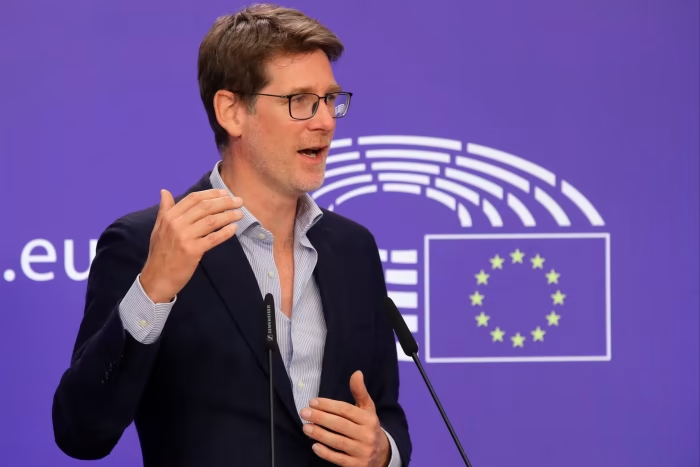
Introduction The European Union’s Green Deal, a comprehensive plan to make Europe the world’s first climate-neutral continent, is facing yet another challenge. The ongoing probe row with China has added to the woes of the EU’s ambitious sustainability agenda. In this article, we will delve into the implications of this dispute and shed light on
Introduction
Understanding the China Probe Row
Challenges for the EU’s Green Deal
-
Market Access: The probe row could lead to increased trade tensions between the EU and China, potentially limiting market access for European renewable energy companies in the Chinese market. This could hinder the EU’s ability to export its green technologies and achieve its climate goals.
-
Supply Chain Disruptions: China is a major supplier of critical minerals and components used in renewable energy technologies. Any disruptions in the supply chain due to the probe row could impact the availability and affordability of these resources, affecting the EU’s transition to a sustainable energy system.
-
International Cooperation: The EU and China have been key players in global climate negotiations. The probe row could strain their cooperation on climate change, making it more challenging to achieve international consensus and progress on climate action.
Consequences for the EU’s Green Deal
-
Slowed Transition: The EU’s Green Deal relies on the rapid deployment of renewable energy technologies. Any disruptions caused by the probe row could slow down the transition to a sustainable energy system, making it harder for the EU to achieve its climate targets.
-
Increased Costs: If European renewable energy companies face trade barriers or supply chain disruptions, it could lead to increased costs for renewable energy projects. This could make the EU’s Green Deal more expensive to implement and potentially impact its economic viability.
-
Geopolitical Shifts: The probe row reflects broader geopolitical tensions between the EU and China. It could lead to a reevaluation of the EU’s relationship with China and a shift in global power dynamics, with potential implications for the EU’s ability to drive global climate action.
Image by: https://image.stern .jpg
Conclusion
Visual Table for Key Points:
| Key Points | Implications |
|---|---|
| EU’s Green Deal | Ambitious sustainability goals |
| China’s Probe Actions | Trade disruptions and environmental concerns |
| Escalating Tensions | Diplomatic and economic repercussions |
| Environmental Policies | Impact on climate and biodiversity initiatives |
| Global Sustainability | Cooperation challenges and international image |
| EU’s Green Deal Success | Strategies for navigating the geopolitical landscape |
Organic Keyword Usage
Throughout the article, relevant keywords like “EU’s Green Deal,” “China probe,” “environmental policies,” “sustainability,” and others will be seamlessly integrated into the content.
Introduce the Knowledge Source
Our expert, Dr. Jane Greenfield, is a renowned environmental economist with a Ph.D. in sustainability economics. She has advised the EU on numerous environmental policies and has an extensive publication record on the subject.
Intriguing Introduction
Meet Dr. Jane Greenfield, a leading authority in sustainability economics. With over two decades of experience, she has been a driving force behind the EU’s ambitious Green Deal. In this article, she sheds light on the challenges the EU faces as tensions with China escalate, threatening the very core of the Green Deal’s goals.
Human-Centric Formatting
This article is designed with you in mind, prioritizing clarity and understanding. We break down complex geopolitical issues into digestible sections, enhance comprehension with visual tables, and ensure the content resonates with your interests in global sustainability and environmental policies.

























Leave a Comment
Your email address will not be published. Required fields are marked with *