
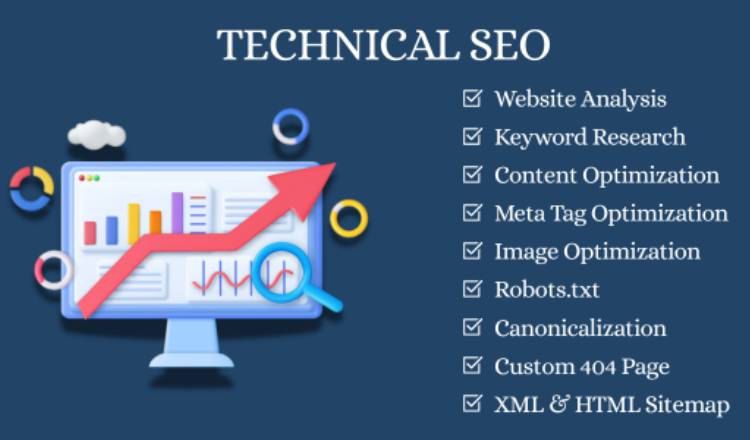
Introduction Search engine optimization is often associated with keywords, backlinks and content creation – but there is another important element that quietly determines your website’s success: technical SEO. It is the foundation that ensures that your website is visible, searchable and user-friendly in the eyes of search engines. If you’ve ever wondered what technical SEO
Introduction
Search engine optimization is often associated with keywords, backlinks and content creation – but there is another important element that quietly determines your website’s success: technical SEO. It is the foundation that ensures that your website is visible, searchable and user-friendly in the eyes of search engines.
If you’ve ever wondered what technical SEO is and why it’s important, the answer lies in understanding how search engines evaluate your website behind the scenes. Even the most compelling content cannot rank if your technical structure is not optimized. Think of technical SEO as the digital architecture that supports everything else—without it, your website can’t perform at its best.
Let’s learn what technical SEO really means, why it’s important to rankings, and how you can master it to give your website a powerful advantage.
What Is Technical SEO? Why It’s Crucial for Rankings
1. What exactly is technical SEO?
Technical SEO refers to optimizing the backend of your website so that search engines can crawl, index and understand your pages effectively. Unlike on-page SEO, which focuses on content and keywords, or off-page SEO, which is concerned with backlinks and authority, technical SEO is about structure and performance.
This includes optimizing your site’s speed, ensuring mobile friendliness, using HTTPS for security, creating clean URL structures, and handling crawl errors. Essentially, it’s the “behind the scenes” work that helps search engines see your site as reliable, accessible and worthy of ranking.
When technical SEO is done right, search engines can easily navigate and interpret your website – increasing your visibility and ensuring you appear for relevant searches.
Some of the most common areas of technical SEO include:
- Website speed and performance
- Mobile-friendliness
- Secure connections (HTTPS)
- Proper site architecture and navigation
- XML sitemaps and robots.txt files
- Fixing crawl errors and broken links
- Structured data (schema markup)
2. Why technical SEO is important for rankings
Search engines like Google use complex algorithms to determine which websites deserve the top spot. A technically sound website meets these algorithmic requirements and provides the best possible experience for users.
If your site has broken links, slow loading times, or confusing navigation, Google’s robots may struggle to index it properly. Even worse, visitors can leave out of frustration and increase your bounce rate – another factor that can hurt your rankings.
Technical SEO ensures that your website is optimized for both humans and algorithms. It’s about creating a seamless digital environment that increases trust, reach and overall performance.
3. Website Speed: The First Impression That Matters
In the digital world, speed equals satisfaction. According to Google, if a page takes more than three seconds to load, more than half of users will abandon it.
A slow website doesn’t just affect user experience – it directly affects your SEO rankings. Search engines prefer fast-loading pages because they give users a better experience.
To improve site speed:
- Compress and optimize images.
- Use browser caching and content delivery networks (CDNs).
- Reduce heavy code like JavaScript and CSS.
- Choose a reliable hosting provider.
When your site loads quickly, you not only retain visitors, but also signal to search engines that your site deserves to rank higher.
4. Mobile friendliness: A must for modern SEO
Now more than 60% of Internet traffic comes from mobile devices. This means that if your website is not mobile optimized, you are missing out on a huge audience.
Google’s mobile-first indexing means that the mobile version of your website is considered the primary version when determining rankings. A responsive design that adapts to different screen sizes is no longer optional – it’s mandatory.
Test your website using Google’s mobile-friendly testing tool. Make sure buttons are easy to press, text is legible, and pages don’t require excessive zooming or scrolling.
A seamless mobile experience not only boosts SEO, but also keeps users engaged and encourages longer visits – another ranking signal.
5. Secure your website with HTTPS
Security plays a big role in both user trust and search rankings. If your site still uses HTTP instead of HTTPS, visitors may see a “not secure” warning, which will deter them from stopping by.
Google has confirmed HTTPS as a ranking factor. It encrypts the data exchanged between the user and your website, protecting sensitive information from being intercepted.
Switching to HTTPS is a simple but powerful step to increase reliability, user trust and SEO performance at the same time.
6. Searchability and indexing: Speak Google’s language
In order for your website to appear in search results, search engines must first crawl and index it. Crawlability refers to how easily search engine bots can access your pages, while indexing determines which of those pages are stored in the search engine’s database.
How to optimize crawlability:
- Submit an updated XML sitemap to Google Search Console.
- Use proper internal linking to help bots find deeper pages.
- Avoid duplicate content or unnecessary redirects.
- Fix broken links (404 errors).
Think of it as inviting Google to visit your site – if your ‘aisles’ are clear and well organized, it can navigate efficiently and reward your site with better rankings.
7. Structured data: helps search engines understand you
Structured data, or schema markup, is the code that helps search engines understand the context of your content. This can lead to rich snippets in search results – such as reviews, ratings, event details or product information.
By implementing structured data, you make it easier for Google to interpret your content accurately and display it in an attractive way. This not only improves your click-through rate, but also strengthens your authority in the search results.
Key Elements of Technical SEO
Now that you know why it’s important, let’s explore the main components of technical SEO that can impact your rankings.
1. Website Speed Optimization
Your website’s loading time directly affects user experience and search engine rankings. To make your site faster:
- Compress large images
- Use browser caching
- Minify CSS, JavaScript, and HTML files
- Use a reliable hosting service
A fast website keeps users engaged and reduces bounce rates, helping your SEO performance.
2. Mobile-Friendliness
With mobile-first indexing, Google looks at your mobile site before the desktop version. Use a responsive design that adapts to different screen sizes. Make sure buttons and menus are easy to tap and content is readable without zooming.
3. Secure HTTPS Connection
Security is a major ranking factor. An HTTPS website encrypts data between the browser and server, protecting users’ personal information. It also gives your visitors confidence in your site.
4. Site Architecture and Navigation
Your website should be structured logically, with clear categories and subcategories. A well-organized site helps users and search engines find information easily. Use internal links to connect related pages, which also improves crawlability.
5. XML Sitemap and Robots.txt
An XML sitemap tells search engines which pages to crawl, while a robots.txt file tells them which ones to ignore. Together, these files guide search engines through your site efficiently. Make sure your sitemap is updated regularly and submitted to Google Search Console.
6. Fixing Crawl Errors and Broken Links
Broken links or 404 errors create a poor user experience and can harm your SEO. Use online tools to identify and fix these errors. Redirect old or deleted pages to relevant new ones to retain link value.
7. Structured Data (Schema Markup)
Structured data helps search engines understand the content of your pages. It can also enhance your search listings with rich snippets like ratings, prices, or event dates, making your results stand out.
8. Canonical Tags
Sometimes, your website may have multiple URLs showing the same content. Canonical tags help search engines identify which version is the main one, avoiding duplicate content issues.
9. URL Structure
Use clean and descriptive URLs. A simple structure makes it easier for both users and search engines to understand what the page is about. For example, use “/digital-marketing-services” instead of “/page?id=123”.
10. Core Web Vitals
Core Web Vitals are metrics that measure how quickly and smoothly your site loads and responds. They include:
- Largest Contentful Paint (LCP) – how fast your main content loads
- First Input Delay (FID) – how quickly your site responds to user actions
- Cumulative Layout Shift (CLS) – how stable your page layout is while loading
Improving these metrics helps enhance both user experience and search rankings.
Common Technical SEO Mistakes to Avoid
Many websites suffer from ranking issues due to small technical errors. Here are some common mistakes to avoid:
- Having slow page speed
- Not using HTTPS
- Poor mobile design
- Missing or outdated sitemap
- Duplicate content or missing canonical tags
- Broken internal or external links
- Ignoring image optimization
Fixing these problems can lead to noticeable improvements in traffic and rankings.
How to Audit Your Technical SEO
Regular technical audits help keep your website healthy and performing well. Here’s how to do it:
- Check site speed using tools like Google PageSpeed Insights.
- Use Google Search Console to find crawl errors or indexing issues.
- Test mobile usability to ensure your site works well on phones.
- Review your sitemap and make sure it’s properly submitted.
- Monitor broken links and redirect or fix them.
- Evaluate structured data to ensure your schema markup is correct.
Performing an audit every few months helps prevent problems before they impact your rankings.
Benefits of Strong Technical SEO
When your technical SEO is in good shape, you’ll see multiple benefits:
- Faster page load times and better user experience
- Higher rankings on search engines
- Increased organic traffic
- More leads and conversions
- Improved website security
- Easier site maintenance and updates
A technically sound website is the foundation for all your marketing efforts.
Future of Technical SEO
As search engines evolve, technical SEO continues to grow in importance. With advancements in artificial intelligence and voice search, websites must adapt quickly. In the future, factors like website accessibility, structured data, and user experience will become even more critical.
Businesses that invest in technical SEO today will have a long-term advantage, as their websites will be ready for new technologies and ranking algorithms.
Regular audits: Keep your website technically sound
Technical SEO is not a one-time setup – it is an ongoing process. Websites evolve and new issues may arise as you add content or features.
Perform regular SEO audits to identify and fix issues such as slow pages, broken links, or missing tags. Tools like Google Search Console, Screaming Frog and SEMrush can help you monitor the technical health of your website.
The more consistent your maintenance is, the more stable your ranking will be over time.
Final Thoughts
In short, technical SEO is the invisible engine that drives your website’s visibility and performance. It’s the framework that ensures your content is found, your pages load quickly, and your visitors stay engaged.
No matter how exceptional your content or keyword strategy is, without a strong technical foundation, your site will not reach its full ranking potential.
If you’re serious about increasing your website’s performance, improving user experience and achieving higher rankings, consider partnering with MediaUpshift, where cutting-edge technical SEO meets proven digital strategy.
For more blogs visit:- Truegazette