

In the fast-paced world of modern software development, speed and reliability are no longer just “nice-to-have” features. They are the bedrock of success. Today, we build applications using complex distributed architectures, cloud-native platforms, and intricate microservices. At the very center of this digital web sits the API (Application Programming Interface). APIs act as the messengers
In the fast-paced world of modern software development, speed and reliability are no longer just “nice-to-have” features. They are the bedrock of success. Today, we build applications using complex distributed architectures, cloud-native platforms, and intricate microservices. At the very center of this digital web sits the API (Application Programming Interface).
APIs act as the messengers that allow different services, applications, and users to talk to one another. Because they function as the backbone of our modern software ecosystems, ensuring they work perfectly is a high-stakes task. This is exactly why API automation testing has transitioned from a niche activity to a core practice for every high-performing engineering team.
Defining API Automation Testing
At its heart, API automation testing is the practice of using specialized tools and frameworks to validate the functionality, security, and performance of an interface. In the past, developers might have manually sent requests and checked responses. However, manual effort simply cannot keep up with the scale of modern tech.
Instead of human intervention, automated scripts execute predefined test cases every single time the code changes. These tests go deep into the system to validate:
- HTTP Status Codes: Ensuring the server responds correctly (e.g., a 200 OK or a 404 Not Found).
- Data Accuracy: Checking that the request and response payloads contain the right information.
- Business Logic: Verifying that the internal “rules” of the application are being followed.
- Security Protocols: Testing authentication and authorization to keep data safe.
- Performance Metrics: Making sure the API responds quickly even under pressure.
Since APIs operate independently of the visual user interface (UI), testing them allows teams to find and fix “brain-level” logic errors before a single pixel is even rendered on a screen.
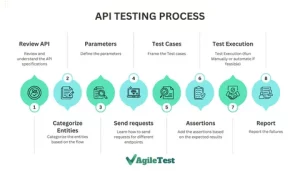
Why Automation is a Modern Necessity
The tech landscape evolves at a staggering speed. Features are added daily, and deployments happen almost constantly. If you rely on manual testing in this environment, you will inevitably create a bottleneck. Here is why automation is the only way forward:
1. Detecting Bugs in the “Cradle”
You can run API tests as soon as an endpoint is created. You don’t need to wait for a finished website or mobile app. By catching bugs during these early stages, teams save an immense amount of time and money that would otherwise be spent on late-stage fixes.
2. Eliminating “Flaky” Tests
If you have ever done UI testing, you know how fragile it can be. A small change in a button’s color or a slow-loading browser can cause a test to fail. API tests are different. They are stable and direct. They aren’t distracted by layout changes or browser inconsistencies, which makes them far more reliable.
3. Scaling with CI/CD
Modern teams use Continuous Integration and Continuous Deployment (CI/CD). In this model, code is constantly being merged and shipped. Automated API tests fit perfectly into these pipelines. They act as a quality gate, automatically checking every update to ensure nothing breaks before it reaches the customer.
Introducing Keploy: The Future of API Testing
When discussing the leaders in this space, Keploy stands out as a revolutionary platform. While traditional tools require engineers to spend hours writing and maintaining test scripts, Keploy takes a smarter approach. It uses real-world traffic to do the heavy lifting.
How Keploy Changes the Game
Keploy records actual API interactions and automatically converts them into reusable test cases. This removes the most painful part of testing: the manual creation of scripts. It also automatically “mocks” dependencies. This means if your API relies on a third-party database that is currently down, Keploy simulates that database so your tests can keep running without interruption.
Why teams are choosing Keploy:
-
Zero-Code Generation: You don’t need to write complex scripts from scratch.
-
High Accuracy: It uses real requests and responses, ensuring your tests reflect reality.
-
Microservice Ready: It is built specifically for the complex, distributed systems used by tech giants today.
The Core Components of a Strong Testing Strategy
To truly master API automation, you need to look beyond simple “success” messages. A robust strategy involves several layers of validation:
Functional and Schema Testing
First, you must ensure the API does what it says it will do. This includes checking the response structure and data types. For example, if a field is supposed to return a number, the test should fail if it receives a string of text instead.
The “Stress Test”
Performance testing measures how your API handles a crowd. Does it slow down when 1,000 people use it at once? Understanding these limits helps prevent system crashes during peak traffic hours.
Negative Testing (The “What If” Scenarios)
A good tester is a bit of a pessimist. You must test how the API reacts to bad inputs, missing headers, or unauthorized login attempts. A well-designed API should fail gracefully and provide clear error messages rather than crashing the whole system.
Comparing the Toolbelt: Keploy vs. Traditional Methods
Many developers grew up using tools like Postman, REST Assured, or Pytest. While these tools are certainly powerful, they often require a high level of manual maintenance. Every time you change a feature, you have to go back and update your test scripts.
In contrast, Keploy automates the maintenance. It bridges the gap between development and quality assurance by turning real-world behavior into a testing suite. While Postman is excellent for exploring a new API, and REST Assured is great for Java-heavy environments, Keploy is built for the era of automation-first engineering.
Best Practices for Success
If you want to maximize your ROI on automation, keep these rules in mind:
-
Start Early: Don’t wait for the end of the sprint. Test as you build.
-
Use Realistic Data: Testing with “dummy” data can hide real problems. Use production-like scenarios whenever possible.
-
Isolate Your Tests: Use mocking to ensure that a failure in one service doesn’t cause a “domino effect” across your entire test suite.
-
Iterate Constantly: Your tests should evolve as your product grows. Treat your test suite like a living document.
Looking Ahead: The Future of Quality
As we move toward a future powered by AI and even more complex integrations, API automation will only become more intelligent. We are moving toward a world where “traffic-based” generation and intelligent mocking are the norm.
Teams that adopt these modern approaches today will be the ones that scale effortlessly tomorrow. By reducing manual toil and focusing on high-quality, automated feedback loops, developers can spend less time fixing old bugs and more time building new, exciting features.
Conclusion
At the end of the day, APIs are the heartbeat of our digital lives. Their reliability directly impacts the user experience and the bottom line of the business. API automation testing allows us to move fast without breaking things. With platforms like Keploy leading the charge, organizations can finally eliminate the drudgery of manual testing. In the competitive landscape of 2026, automated testing is no longer a luxury—it is the essential engine of sustainable software development.