
Launching a food venture in India this year has newfangled challenges, but it calls for complying with the regulations. Among the most vital prerequisites is the FSSAI Registration. From a Home kitchen, Food Stall, restaurant, or Food Manufacturer, you require FSSAI approval, which is compulsory as per the Food Safety and Standards Act, 2006, to start your
Launching a food venture in India this year has newfangled challenges, but it calls for complying with the regulations. Among the most vital prerequisites is the FSSAI Registration. From a Home kitchen, Food Stall, restaurant, or Food Manufacturer, you require FSSAI approval, which is compulsory as per the Food Safety and Standards Act, 2006, to start your food business. This article contains all the details regarding the FSSAI Registration process, Eligibility, required documents, and advantages.
What is FSSAI Registration?
This registration guarantees food business operates in accordance with the hygiene and safety standards of the authority. It contributes to controlling the quality of food and provides a shield for consumers from adulterated or hazardous foodstuffs.
Who Needs FSSAI Registration?
FSSAI Registration is mandatory for petty food business operators with an annual turnover of up to ₹12 lakh. This typically includes:
- Small manufacturers or processors
- Home-based food businesses
- Street food vendors and hawkers
- Temporary stall holders
- Small retailers and distributors
When a business crosses the turnover threshold, it has to obtain a State or Central FSSAI License in place of the basic registration. Selecting the appropriate category is important to avoid penalties or rejection.

Types of FSSAI Approval
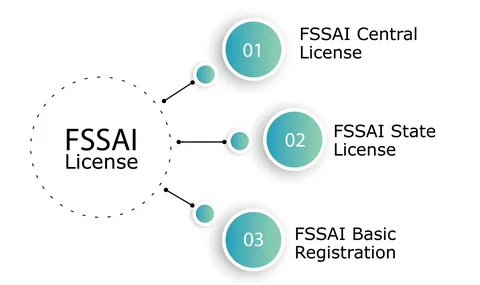
Food businesses in India are categorized into three levels:
- Basic FSSAI Registration – For small businesses with a turnover up to ₹12 lakh.
- Medium-sized companies – with revenue between ₹12 lakh and ₹20 crore are eligible for the State FSSAI License.
- Central FSSAI License – Large-scale companies and importers/exporters who are doing business in multiple states.
This is related mainly to FSSAI Registration (which is for new entrepreneurs in the food business and small-scale operators).
Required Documents for FSSAI Registration
To apply for Registration, applicants generally need:
- The size of a photo is passport
- Proof of identity (Aadhaar card, voter ID, etc.)
- Address proof of business premises
- Details of food business activities
- Contact information (email and telephone number)
- It is important to provide true and correct information, as false information might result in a delay in the grant.
Apply for FSSAI Online
The FSSAI Registration application can be submitted through online mode at FSSAI.org Portal.
Here is the simplified step-wise procedure:
- Go to the official FSSAI.ORG site.
- Sign up with an email and mobile number.
- Click “Registry Apply for Registration” and select your business type.
- Fill in the required business details carefully.
- Upload necessary documents.
- Pay the prescribed fee online.
- Submit the application and note the reference number for tracking.
After submitting the application, it is scrutinized by the appropriate authority. If all is well, the registration certificate is granted.
FSSAI registration and its validity period
The Licensee can opt for a duration of the license validity from 1 to 5 years. Choose a longer period of validity to avoid renewing too often. Renewal must be done before the expiration. Don’t drop it, or you may have to pay a fine or have your license revoked.
Benefits of FSSAI Registration
Obtaining FSSAI Registration offers several advantages:
- Compliance with the Law: Makes you able to conduct your food business legally.
- Consumer Confidence: Customers have confidence when they buy from a registered food business.
- Brand Credibility: Adds to your business image.
- Business Growth: Necessary to sell via online shopping malls and retail stores.
- Access to government support: Registered businesses can avail themselves of food safety training and awareness schemes.
Important Compliance Guidelines
After receiving FSSAI Registration, food business operators must:
- The registration certificate shall be displayed at the business premises.
- FSSAI registration number should be mentioned on the food packaging (wherever applicable).
- Maintain hygiene and sanitation.
- Comply with labelling and safety requirements as laid down.
- Failure to comply may result in fines and/or the suspension of registration.
Conclusion
Registration with FSSAI is the first and mandatory step for starting a food business in India. This will make sure that you run food-safe operations and gain customer confidence. Knowing the process in its entirety, from eligibility to document requirements to applying online and renewing helps avoid delays and legal harassment.
For those who want to initiate or regularize a food business, obtaining the FSSAI license shall be their first task. Comply with the rules and guidelines, stay safe, and make your food business in India a reliable and profitable one. Following proper food safety standards not only helps you avoid legal issues but also builds strong trust among your customers. When you maintain hygiene, use quality ingredients, and follow FSSAI regulations, your brand reputation naturally improves in the market.
Additionally, staying compliant allows you to expand your business smoothly without facing regulatory hurdles. You can also explore opportunities like partnerships, online delivery platforms, and retail expansion with confidence. In the long run, consistent compliance and good practices will help you achieve steady growth, customer loyalty, and long-term success in India’s competitive food industry.