
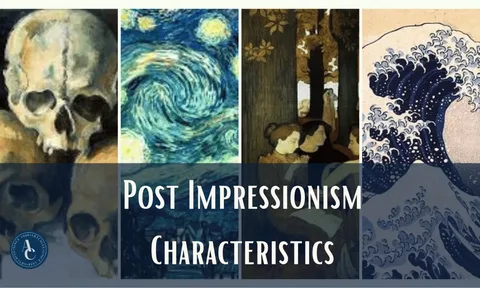
Post-Impressionism emerged as a powerful artistic revolution toward the end of the nineteenth century. This dynamic movement developed as a direct answer to the perceived limitations of Impressionism. While Impressionist painters concentrated on capturing transient light and natural scenes with loose brushstrokes, Post-Impressionist artists took a very different path. They gave far more importance to
Post-Impressionism emerged as a powerful artistic revolution toward the end of the nineteenth century. This dynamic movement developed as a direct answer to the perceived limitations of Impressionism. While Impressionist painters concentrated on capturing transient light and natural scenes with loose brushstrokes, Post-Impressionist artists took a very different path.
They gave far more importance to building a solid structural foundation within their work. They also focused heavily on depicting defined forms and releasing intense personal emotions through their creations.
Crucially, the distinguishing factor of this new movement was not a single, unified style. Instead, it represented a collective attempt to understand the deeper layers and deeply personal areas of human expression.
Defining Characteristics of Post-Impressionist Art
Post-Impressionist art pieces frequently featured remarkably bright colors and highly energetic brushstrokes. Creators also experimented with unusual layout designs to set their work apart. They played around with different shapes, bold lines, and rich textures to express complex inner feelings. This allowed them to present their final artworks as powerful symbols rather than mere reflections of reality.
This philosophy marked a major shift from the styles that came before. Impressionists still held high the mirror of the visible world to capture a fleeting moment in time.
In sharp contrast, Post-Impressionists gave complete prominence to the artist’s main idea, concept, or emotional state. Consequently, this creative shift culminated in fascinating artworks that are not only full of life but also actively challenge a viewer’s thinking.

Famous Post-Impressionist Artists and Their Impact
Some of the most famous Post-Impressionist painters include Vincent van Gogh, Paul Cézanne, Paul Gauguin, and Georges Seurat. Each of these legendary painters brought a distinct, deeply individual style to the broader movement. Their combined discoveries and stylistic inventions did not just affect each other at the time. They fundamentally shaped the entire course of modern art for decades to come.
-
Vincent van Gogh: Van Gogh painted with colorful, dynamic brushstrokes that practically danced across the canvas. His thick application of paint conveyed a raw, vibrating emotional energy that transformed everyday scenes into deeply psychological experiences.
-
Paul Cézanne: Cézanne took a much more analytical approach to his canvases. He carefully worked out the underlying shapes of natural objects, reducing complex landscapes and still lives to fundamental geometric forms. His structural experimentation laid the groundwork for the birth of Cubism.
-
Georges Seurat: Seurat is globally celebrated for creating Pointillism. This highly precise technique involved painting entire scenes using thousands of tiny, distinct dots of pure color. When viewed from a distance, the viewer’s eye naturally blends these dots together into a cohesive, luminous image.
-
Paul Gauguin: Gauguin chose to step away from traditional Western subjects entirely. He traveled extensively to depict highly unusual, exotic subjects, particularly focusing on the people and landscapes of Tahiti. His work utilized flat planes of vibrant, non-realistic color to achieve a symbolic and mythic quality.
Common Themes and Subjects
The Post-Impressionists did not necessarily change what artists painted, but they radically transformed how they painted it. The most common subjects depicted during this era included sweeping landscapes, intimate portraits, traditional still lifes, and casual scenes from everyday life.
However, through this revolutionary movement, artists started using the canvas primarily as a medium for intense personal expression, symbolic content, and deep emotional evocation.
This conceptual approach resulted in multi-layered artworks that required more than a passing glance to truly comprehend. A simple bowl of fruit or a standard hillside view became a complex playground for exploring human psychology, structure, and color theory.
The Rewarding World of Collecting Post-Impressionist Art
For modern collectors and passionate art enthusiasts, acquiring Post-Impressionist works can be an incredibly rewarding and educational journey. Because this era bridged the gap between traditional representation and modern abstraction, these pieces hold immense historical significance. Many elite galleries and international auction houses regularly offer access to original paintings, fine art prints, and historic lithographs from this turning point in art history.
However, navigating this specific market requires a fair amount of background knowledge. Understanding the defining characteristics, core artists, and historical context of Post-Impressionism can help collectors make smart purchasing choices.
This education ensures buyers select authentic pieces that truly reflect the spirit of the era. Ultimately, diving into the history of the movement deepens one’s long-term respect for its enduring cultural impact.
Conclusion
Post-Impressionism stands as a monumental landmark in the history of global art. It serves as the crucial creative bridge that connects early Impressionism with various radical modern art forms, including Expressionism, Fauvism, and Cubism.
The movement’s heavy emphasis on raw feeling, structural composition, and total self-expression has kept it incredibly relevant and appealing to artists and collectors today. Delving into the world of Post-Impressionism richly enriches one’s personal appreciation of artistic innovation. It opens your eyes to the revolutionary use of color and the fascinating development of visual narratives.