
Enterprise systems are undergoing a fundamental shift. What once revolved around standalone tools has evolved into integrated environments where operations, data, and decision-making converge. As businesses scale, choosing the best ERP system is no longer about feature comparison, it’s about selecting the right architecture. In 2026, ERP is not just software. It’s the operational backbone
Enterprise systems are undergoing a fundamental shift. What once revolved around standalone tools has evolved into integrated environments where operations, data, and decision-making converge. As businesses scale, choosing the best ERP system is no longer about feature comparison, it’s about selecting the right architecture.
In 2026, ERP is not just software. It’s the operational backbone of the enterprise.
Why the Definition of the Best ERP System Is Changing
Traditionally, ERP systems focused on financial management, inventory, and reporting. But modern enterprises operate in far more dynamic environments.
Today’s challenges include:
- Fragmented applications across departments
- Data duplication between systems
- Delayed insights due to disconnected analytics
- Complex integration layers
This is why the concept of the best ERP system has shifted from functionality to architecture.
Instead of asking “What features does it have?”, organizations are asking:
- How does it integrate with other systems?
- Can it scale with enterprise workloads?
- Does it provide real-time data across operations?
The answer increasingly points toward unified platforms rather than isolated ERP tools.
Key Characteristics of the Best ERP Software in 2026
To identify the best ERP software, businesses must evaluate systems based on structural capabilities, not just modules.
1. Platform-Based Architecture
Modern ERP systems are built on platforms, not standalone applications. This allows:
- Seamless integration with CRM, WMS, and HR systems
- Unified data models
- Reduced dependency on middleware
A platform approach eliminates silos and improves operational consistency.
2. Real-Time Data Across the Enterprise
The best ERP system enables real-time data access across all business functions.
Instead of syncing data between systems, organizations operate on a single source of truth.
This enables:
- Faster decision-making
- Accurate reporting
- Improved operational visibility
3. Built-in Analytics and Intelligence
ERP systems are no longer just transactional engines. They now include:
- Embedded analytics
- SQL-based reporting
- AI-driven insights
- Interactive dashboards
This removes the need for external BI tools and simplifies the analytics stack.
4. Scalable Cloud and Deployment Flexibility
While many ERP vendors push SaaS-only models, modern enterprises require flexibility.
The best ERP software supports:
- Cloud deployment
- Private cloud environments
- On-premise infrastructure
This ensures compliance, data control, and adaptability across industries.
5. Automation and Workflow Optimization
Automation is central to enterprise efficiency.
Leading ERP systems provide:
- Workflow automation
- Rule-based processing
- Event-driven actions
This reduces manual effort and improves process reliability.
Best ERP System for Small Businesses: What Matters Most
Small and growing businesses often face a different challenge: balancing simplicity with scalability.
The best online ERP for small business should offer:
- Easy deployment without complex infrastructure
- Flexible configuration as the business grows
- Integrated modules to avoid multiple tools
However, many small businesses fall into a common trap choosing lightweight SaaS tools that later become limitations.
A better approach is selecting an ERP system that can scale from small operations to enterprise-level complexity without requiring a complete system replacement.
The Role of Enterprise Architecture in ERP Selection
One of the most overlooked factors when choosing the best ERP system is architecture.
Architecture determines how systems:
- Communicate
- Scale
- Handle data
- Support future expansion
Monolithic vs. Platform-Based Systems
Traditional ERP systems often operate as monolithic applications.
Modern platforms, on the other hand:
- Separate logic, data, and interface layers
- Enable modular expansion
- Support high-performance processing
This architectural shift is critical for organizations dealing with high transaction volumes and complex workflows.
Integration: The Hidden Cost of Traditional ERP Systems
Many businesses underestimate the cost of integration.
When ERP systems are not designed for unified operations, organizations must rely on:
- Middleware
- APIs
- Data pipelines
This creates:
- Maintenance overhead
- Increased failure points
- Delayed data synchronization
The best ERP software reduces or eliminates these integration layers by operating within a unified system environment.
ERP Is No Longer a Standalone System
In 2026, ERP systems do not operate in isolation.
They are part of a broader ecosystem that includes:
- Customer relationship management
- Warehouse management
- Supply chain systems
- Analytics platforms
Modern enterprise platforms unify these capabilities into a single architecture.
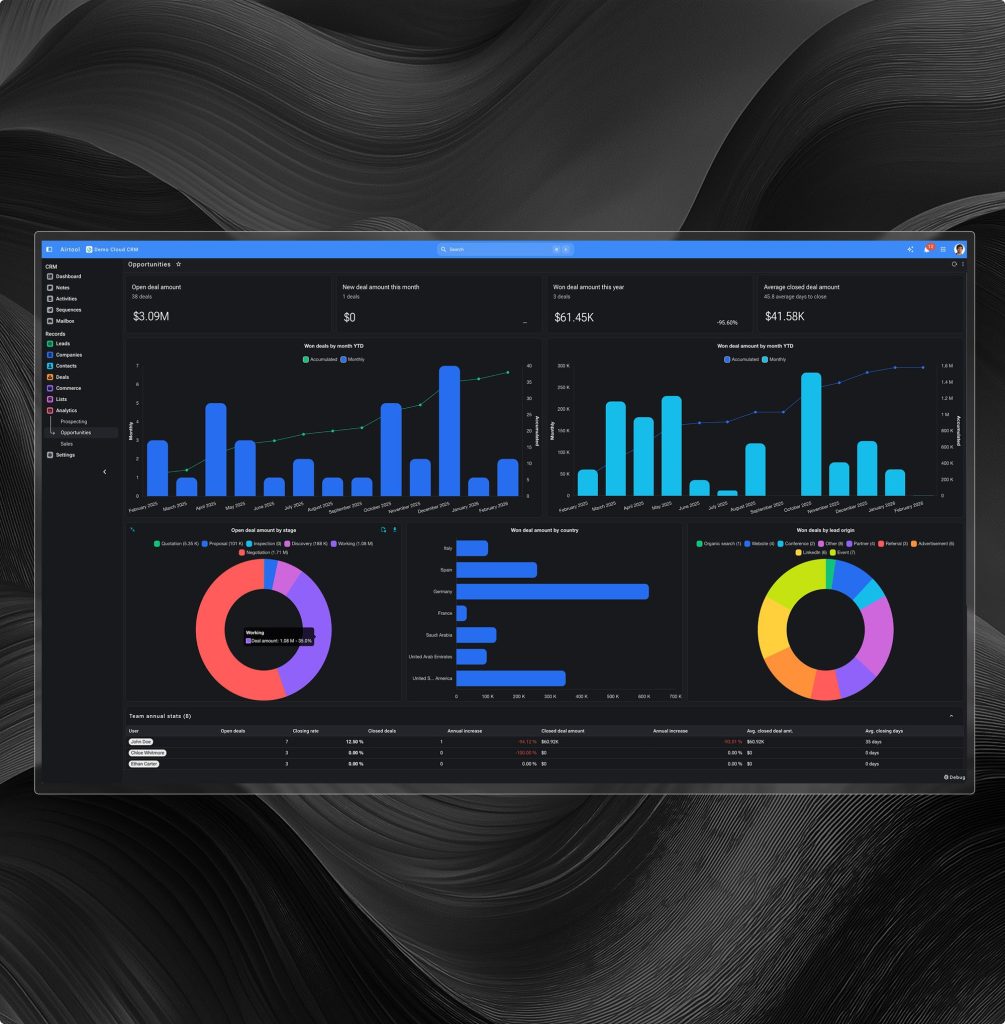
For example, platforms like Airtool illustrate how ERP can function as part of a larger system rather than a standalone tool. Instead of relying on multiple disconnected applications, organizations can operate ERP, CRM, and analytics within a single environment. This approach simplifies system design and improves data consistency.
If you’re exploring how such architectures work in practice, you can review this enterprise-focused approach to an
enterprise ERP platform that integrates multiple business systems into one unified framework.
Cloud, SaaS, and the Future of ERP
Cloud adoption continues to grow, but it’s important to distinguish between SaaS and true platform flexibility.
While SaaS ERP systems offer convenience, they often introduce:
- Vendor lock-in
- Limited customization
- Restricted data control
The best ERP system in 2026 balances cloud advantages with deployment flexibility.
This allows organizations to:
- Retain control over infrastructure
- Adapt to regulatory requirements
- Optimize performance for specific workloads
Choosing the Best ERP System for Your Business
Selecting the right ERP requires a strategic approach.
Here are key considerations:
Evaluate Business Complexity
- Number of users
- Transaction volume
- Operational scope
Assess Integration Needs
- Existing systems
- Data flow requirements
- Third-party dependencies
Prioritize Long-Term Scalability
- Future growth
- Expansion into new markets
- Increasing data volume
Focus on Architecture, Not Just Features
The best ERP system is one that aligns with your long-term technology strategy.
Features can be added. Architecture cannot be easily changed.
Final Thoughts
ERP systems are evolving into comprehensive enterprise platforms. The shift from fragmented tools to unified systems is redefining how businesses operate.
The best ERP software today is not just about managing resources, it’s about enabling real-time operations, reducing complexity, and supporting scalable growth.
Organizations that prioritize architecture, integration, and data consistency will be better positioned to adapt to future demands.
Book a Demo
If you’re exploring modern ERP architectures and want to understand how unified enterprise platforms work in practice, consider scheduling a demo to see how these systems operate in real-world scenarios.