
The world of building and development has changed rapidly. In 2026, construction cost estimating is no longer a simple game of guesswork. It has evolved into a highly advanced, data-driven discipline. Today, project success depends on precision. With material costs fluctuating and labor shortages becoming the norm, accurate estimation is the foundation of every profitable
The world of building and development has changed rapidly. In 2026, construction cost estimating is no longer a simple game of guesswork. It has evolved into a highly advanced, data-driven discipline. Today, project success depends on precision. With material costs fluctuating and labor shortages becoming the norm, accurate estimation is the foundation of every profitable build. Whether you are a custom home builder, a large-scale developer, or a project manager, you must master modern estimating to thrive.
Understanding Modern Estimating Services
At its core, a construction cost estimating service calculates the total financial commitment required for a project before the first shovel hits the ground. However, modern services offer much more than a final price tag. They provide a granular roadmap for your budget.
A professional estimate typically includes:
-
Material Quantity Takeoffs (QTO): Estimators measure every beam, bolt, and bag of concrete with digital precision.
-
Labor Cost Analysis: This involves calculating man-hours based on current local market rates and union scales.
-
Equipment Evaluation: You must account for everything from heavy machinery rentals to small tool depreciation.
-
Overhead and Profit Margins: Clear calculations ensure your business stays healthy while remaining competitive.
-
Risk and Contingency Planning: Experts set aside specific “buffers” to handle the unexpected.
Why Precision Matters in 2026
The construction industry in 2026 is more competitive than ever. Technology has raised the bar for what clients expect. Accurate estimating serves several vital functions that protect your bottom line.
1. Total Budget Control
Overruns are the primary reason construction firms fail. Professional estimating defines clear financial boundaries. It helps you prevent “scope creep” and keeps the project within its original economic framework.
2. Informed Decision-Making
Data allows stakeholders to evaluate the feasibility of a project before investing millions. You can analyze the potential Return on Investment (ROI) and decide if a project is worth the risk.
3. Securing More Contracts
In a crowded market, your bid must be sharp. An estimate that is too high loses the job. An estimate that is too low ruins your profit. Accurate data allows you to find the “sweet spot” that wins the contract and makes money.
4. Proactive Risk Management
Every project has hidden dangers. Estimators identify potential cost spikes early. They prepare contingency plans so that a sudden rise in lumber prices doesn’t halt your progress.
Common Types of Estimates
Not every project stage requires the same level of detail. Estimators provide different reports depending on your current needs:
-
Preliminary Estimates: You use these during the early planning phase. They rely on rough data and historical costs to see if an idea is even possible.
-
Detailed Estimates: These are the gold standard for bidding. They include precise takeoffs and actual quotes from suppliers.
-
Quantity Takeoffs (QTO): This report focuses purely on the “what” and “how much.” It is essential for procurement teams to order the right amount of steel or wood.
-
Bid Estimates: These are specialized reports for tender submissions. They include strategically calculated profit margins to help you win competitive contracts.
The 2026 Tech Revolution: AI and BIM
The most significant shift in recent years is the integration of high-level technology. We have moved past the era of spreadsheets and manual rulers.
AI-Powered Estimating
Artificial intelligence now analyzes thousands of past projects in seconds. It predicts how local weather patterns or regional labor strikes might impact your specific timeline. This predictive power allows for an accuracy level that humans alone cannot achieve.
Building Information Modeling (BIM)
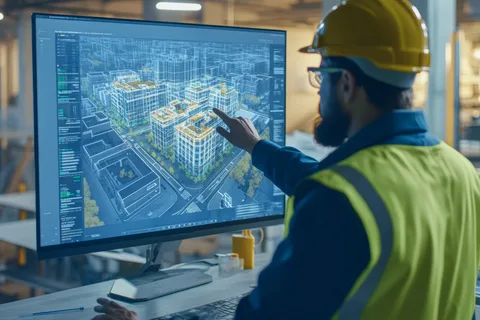
BIM has revolutionized the takeoff process. Estimators now use 5D BIM, which adds “Cost” and “Time” directly into a 3D digital model. When an architect moves a wall in the design, the cost estimate updates automatically. This real-time synchronization eliminates the manual errors that used to plague the industry.
Cloud-Based Collaboration
Teams no longer work in silos. Cloud platforms allow field managers, architects, and estimators to collaborate in real-time. If a material price spikes on a Tuesday, the entire team knows about it by Wednesday morning.
The Benefits of Outsourcing
Many firms are moving away from in-house estimating. Outsourcing to professional services offers several strategic advantages. First, you gain access to specialized software without the high subscription costs. Second, professional estimators often achieve accuracy rates of up to 99%.
Furthermore, outsourcing saves time. Your project managers can focus on building and site safety while the experts handle the complex math. This approach reduces your internal overhead and allows you to scale up for larger projects without hiring more permanent staff.
Overcoming Modern Challenges
Despite these technological leaps, estimators still face significant hurdles in 2026. Market uncertainty is a constant threat. Material prices can fluctuate wildly due to global trade shifts. Additionally, labor cost variations across different states make national projects difficult to price.
Professional estimators mitigate these risks by using Live Market Feeds. Instead of relying on a price list from six months ago, they use software that pulls today’s prices from local suppliers. This “live” data is the only way to stay protected in a volatile economy.
How to Choose Your Estimating Partner
Selecting the right partner is critical. Do not simply look for the lowest fee. Instead, look for experience in your specific niche. A residential estimator might not understand the complexities of an industrial warehouse.
Check their toolkit. Ensure they use AI, BIM, and cloud-based software. Transparency is also vital. Your partner should provide a clear breakdown of how they reached their numbers. Finally, prioritize reliability. In the bidding world, a late estimate is a useless estimate.
The Future: Fully Automated Systems
The industry is moving toward a future of fully automated, programmatic estimation. We are entering an era where real-time cost tracking will be standard. Imagine a project where sensors on a crane track material usage and automatically update the financial report.
Companies that adopt these innovations now will gain a massive competitive edge. Those who stick to old methods will likely find themselves priced out of the market.
Conclusion
Construction cost estimating in 2026 is the ultimate blend of human expertise and machine precision. It is no longer just a “support service.” It is a strategic powerhouse that drives project outcomes. By embracing AI, BIM, and professional expertise, you can control your budget and reduce your risks. Most importantly, you can ensure that every project you start is a project that ends in profit. Precision is your best protection in a fast-moving world.