
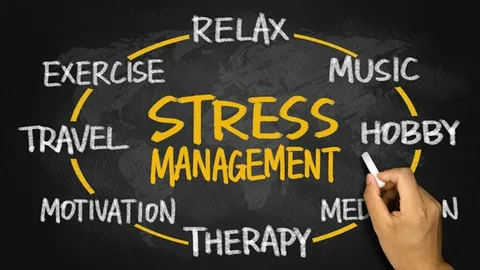
Marinating a healthy relationship is hard when you are feeling stressed. Every relationship goes through ups and downs. Every relationship has its ups and downs, turns, and twirls. By adding stress from job, education, family, finances, and health, a roller coaster ride can be created. In the fast-paced, high-stress world of today, you may wonder
Marinating a healthy relationship is hard when you are feeling stressed. Every relationship goes through ups and downs. Every relationship has its ups and downs, turns, and twirls. By adding stress from job, education, family, finances, and health, a roller coaster ride can be created.
In the fast-paced, high-stress world of today, you may wonder how can you support the health and significance of your relationships? Well, don’t worry anymore. We have made a thorough research and listed some proven tips to make your partnership healthy, managing all the stresses. Let’s explore the insight together.
What stress management is in a relationship
Prior to moving on to the section on stress management, we should first know what stress is and how it affects a relationship.
The American Institute of Stress defines stress as any shift that results in strain on the body, mind, or emotions. When someone feels that demands are greater than their personal and social resources, they may experience this condition or emotion.
When partners actively seek to recognize, comprehend, and skillfully handle the stressors that may threaten their relationship, stress management is achieved. Relationship stress can be managed in a variety of ways, but the first and most crucial step is awareness.
Why stress management is so important in a relationship
Stress has the power to destroy relationships silently. When individuals carry stress, they may unintentionally take it out on each other, which strains communication. It will ultimately result in a breakdown of intimacy and trust if left unchecked.
Understanding the strategies of stress management in your relationship is a sign that you value your connection and are willing to put up an effort for your love. By managing stress effectively, couples can maintain a positive atmosphere, allowing them to be more present. Overall, stress management not only improves individual well-being but also strengthens relationships between partners.

Tips to deal with relationship stress
After learning all about stress and its effects on relationships, here are some useful tips for handling stress in your partnership.
1. Communicate openly and honestly
Studies have found the essence of effective communication in relationships. When stress rears its head, you need to communicate openly and honestly to share your feelings and concerns with your partner. Use “I” statements instead of “WE” to express yourself, and actively listen when your partner does the same.
Communication is more than just talking. Nonverbal communication, including posture, tone of voice, and facial expressions, can tell the other person how you feel. If your behavior doesn’t match your words, nonverbal communication can even be stronger than what you say.
2. Be ready for disagreements
Couples are more likely to argue during times of stress. Be ready for disagreements. Couples are more likely to argue during times of stress. Prepare yourself for conflicts. When such things happen, pay attention to what your partner is saying. Try to understand their emotions and concerns. Give it some thought before speaking when it’s your turn. If you feel getting angry or upset, take a few deep breaths and give yourself more time before reacting.
3. Spend quality time together
The most effective strategy for managing stress in a relationship is to schedule time for one another. Regularly plan date nights or just cuddle up on the couch with a movie. These times spent together can help people calm down.
4. Be a team
One strategy for daily stress management is effective teamwork. The drawback of stress is that it can give you a “me against them” mentality, where you feel like you’re always at battle with other people, including your partner. Work as a team to overcome stress. Together, you can resolve typical pressures, whether they are related to finances, family, or the workplace.
5. Show gratitude
Think about the reasons you adore your partner. Keep in mind and express gratitude for all that your partner does for you. Express affection and appreciation to your partner. You can express your feelings by putting a handwritten note in a place where they can find it easily.
6. Be mindful of the HALT acronym
The University of Colorado Boulder advises considering the term HALT if you feel angry at your partner. It is summed up as follows:
- H: Are you hungry? If the answer is yes, have a snack, and you might feel better.
- A: Are you angry? If so, try to figure out the cause of your anger. Consider going on a walk or taking some time to be alone
- L: Are you lonely? If so, you could sit with your partner and discuss what’s driving your feelings.
- T: Are you tired? If the answer is yes, it’s time to take a break. Yoga sessions or deep breathing exercises may help you feel refreshed and at ease.
7. Plan vacations
Plan quick trips or vacations together on a regular basis. These departures from the usual can be restorative and offer much-needed relaxation from stress. Planning these trips together also helps since it gives you something exciting to look forward to.
8. Keep your intimacy alive
Keep the flames of intimacy alive in your partnership to be stress-free. According to studies, frequent sexual activity can reduce psychological and emotional stress. Sometimes, all you need is just mind-blowing sex to get over stress and maintain healthy relationship.
9. Listen carefully rather than prepare a defense
An argument can occasionally resemble a contest in which the object is to outscore your opponent in points. Although it could feel nice to win the disagreement, it doesn’t help your partner or the circumstance feel less stressed.
Try to listen to them if they’re telling you about their anxiety, even if it’s not in a calm or helpful manner. Taking the time to listen to what they have to say will help validate their point of view, even if you disagree with them.
10. Learn how to resolve conflicts
Since arguments with your partner can generate tension, using efficient conflict resolution techniques is essential to figuring out how to handle stress in your relationship. Learn how to fix conflicts in an effective way. Develop the ability to peacefully share your issues and attentively hear what your partner says. Try to avoid contentious debates and concentrate on identifying points of agreement.
11. Look for social support
Research indicates that positive, high-quality social support can improve stress resilience. Accordingly, joining a support group is one strategy to counteract stress and its impact on your relationships.
Make connections with couples or friends who understand the difficulties you face in your relationship. It might be consoling at times to share experiences and guidance.
12. Get relationship help if needed
If things don’t get better, you can ask for relationship help. Many community support services offer programs to make you stay together. You will also find counsellors who offer in-person and virtual sessions. You can speak to a counsellor with your partner. But if your partner doesn’t want to seek therapy, remember that it’s okay to see a counsellor alone.
Last words
For most couples, stress is an unavoidable reality. However, by working together effectively, stress can help your relationship build strength and resiliency. Identifying stressors, practicing healthy communication, and avoiding misdirected stress can help make managing stress easier. By following all these strategies, you can maintain a healthy relationship.