Have you ever found yourself drawn to games that are deceptively simple yet incredibly challenging? Games that, despite their minimalist aesthetics, offer an intense and rewarding experience? If so, then allow me to introduce you to geometry dash, a rhythmic platformer that has captivated millions with its unique blend of precision and pulse-pounding soundtracks. More
Have you ever found yourself drawn to games that are deceptively simple yet incredibly challenging? Games that, despite their minimalist aesthetics, offer an intense and rewarding experience? If so, then allow me to introduce you to geometry dash, a rhythmic platformer that has captivated millions with its unique blend of precision and pulse-pounding soundtracks. More than just a game, it’s an exercise in focus, timing, and pure, unadulterated perseverance. Whether you’re a seasoned gamer or just curious, getting into Geometry Dash can be a surprisingly engaging journey.
What is Geometry Dash? The Basics of Rhythmic Survival
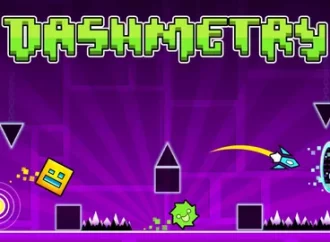
At its core, Geometry Dash is a 2D side-scrolling platformer where you control a geometric icon (usually a cube, but various forms are unlocked later) navigating a series of obstacles. The catch? Everything moves to the beat of an incredibly diverse soundtrack. Your primary action is tapping or clicking to jump, and the timing of these jumps is paramount. Miss a beat, hit a spike, or misjudge a platform, and it’s back to the beginning of the section (or the last checkpoint, if you’ve unlocked one).
The game’s aesthetic is bright, colorful, and often neon-infused, making the visual feedback immediate and impactful. As you progress, you’ll encounter a myriad of different game modes – the cube, a ship, a ball, a UFO, a wave, and a robot – each with its own unique movement mechanics. The cube jumps, the ship flies by holding down the button, the ball flips gravity, the UFO jumps repeatedly, the wave moves diagonally, and the robot performs larger, more deliberate jumps. Mastering each of these transformations is key to conquering the later levels.
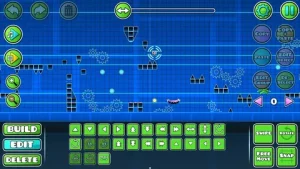
The official levels, created by developer RobTop Games, offer a carefully crafted progression of difficulty, introducing new mechanics and increasing the pace. But a huge part of Geometry Dash’s appeal lies in its vibrant community and the almost endless supply of user-created levels. These range from easy challenges to mind-bending “demons” that push the boundaries of what’s humanly possible.
Sharpening Your Reflexes: Tips for Aspiring Dashers
Diving into Geometry Dash can feel daunting at first. The initial levels, while seemingly straightforward, quickly ramp up in complexity. Here are a few friendly tips to help you navigate this rhythmic labyrinth:
- Start Slow and Steady: Don’t be ashamed to spend time on the easier official levels. They are designed to teach you the fundamental mechanics and rhythms. Each level builds upon the previous one, so a solid foundation is crucial. Replay levels you’ve completed to solidify your understanding and improve your consistency.
- Practice Mode is Your Best Friend: Every level in Geometry Dash has a practice mode. This invaluable tool allows you to place checkpoints anywhere you like. Stuck on a particularly tricky section? Drop a checkpoint right before it and practice that specific sequence repeatedly until you nail it. This breaks down seemingly impossible challenges into manageable chunks.
- Listen to the Music: This might seem obvious, but it’s often overlooked. The music isn’t merely ambient sound; it’s an essential element of the gameplay. Many obstacles and jump cues are perfectly synchronized with the beat. Internalizing the rhythm will help you anticipate upcoming challenges and react instinctively.
- Don’t Be Afraid to Fail (A Lot): Geometry Dash is a game of trial and error. You will die countless times, often in rapid succession. Embrace it! Each failure is a learning opportunity. Pay attention to why you failed. Was your timing off? Did you misread a jump? Gaining insights from your errors is the quickest method to enhance.
- Focus on One Thing at a Time: When a level introduces a new mechanic, try to isolate it and understand how it works before attempting to combine it with other elements. For example, if you’re struggling with the UFO, spend some time in a simple practice level just getting a feel for its jump height and momentum.
- Take Breaks: Staring at the screen for too long, especially during a frustrating section, can lead to tunnel vision and increased mistakes. Step away for a few minutes, clear your head, and come back with fresh eyes and renewed focus.
- Watch Others Play: There’s a huge community of Geometry Dash players on platforms like YouTube and Twitch. Watching experienced players tackle difficult levels can provide insights into strategies, timings, and even inspire you to push your own limits.
The Enduring Appeal
Geometry Dash is more than just a test of reflexes; it’s a testament to patience and persistence. The feeling of finally conquering a level that once seemed impossible is incredibly rewarding. It’s a game that celebrates small victories and encourages continuous improvement. Its simple controls hide a depth of challenge and creativity that continues to evolve. So, if you’re looking for a game that will test your limits, challenge your timing, and immerse you in a world of rhythmic obstacles, give Geometry Dash a try. You might just discover your next obsession.
Geometry Dash is a game that perfectly encapsulates the “easy to learn, hard to master” adage. Its simple controls hide a depth of challenge that is both infuriating and incredibly rewarding. It’s a game that demands your full attention, where every successful jump feels like a tiny victory and every completed level a monumental achievement. So, dim the lights, crank up the volume, and prepare to embark on a rhythmic journey filled with spikes, portals, and endless possibilities. You might just find your new favorite obsession.