
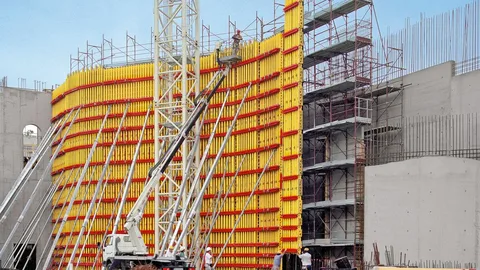
Modern construction depends on precision, strength, and efficiency. Every successful concrete structure starts with a reliable support system that shapes and stabilizes the concrete during the early stages of construction. This temporary framework, known as formwork, plays a vital role in ensuring structural accuracy and long-term durability. As Birmingham continues to experience rapid urban development,
Modern construction depends on precision, strength, and efficiency. Every successful concrete structure starts with a reliable support system that shapes and stabilizes the concrete during the early stages of construction. This temporary framework, known as formwork, plays a vital role in ensuring structural accuracy and long-term durability.
As Birmingham continues to experience rapid urban development, formwork has become increasingly important across residential, commercial, and infrastructure projects. From high-rise buildings to transport facilities, properly designed formwork supports safe construction while improving productivity. Today, modern systems combine innovative materials, advanced engineering, and digital planning to deliver outstanding results.
This article explores the importance of Birmingham formwork, the materials used, safety regulations, technological innovations, and its growing contribution to sustainable construction across the UK.
What Is Birmingham Formwork?
Formwork is a temporary or permanent mould used to hold freshly poured concrete until it hardens and gains enough strength to support itself. In Birmingham, where construction projects range from commercial towers to public infrastructure, formwork is an essential part of every reinforced concrete structure.
The main purpose of formwork is to maintain the correct shape and dimensions of concrete elements. It also provides enough support to withstand the pressure created by wet concrete during pouring and curing. Well-designed formwork ensures smooth finishes, accurate dimensions, and strong structural performance.
Without properly installed formwork, concrete may shift, crack, or develop surface defects. These issues can compromise structural integrity and increase repair costs. Therefore, contractors follow strict engineering standards and British regulations throughout the installation process.
Why Formwork Is Essential in Modern Construction
Every concrete structure depends on reliable support during its early development. Formwork serves several important functions that directly influence construction quality.
Some of its major benefits include:
- Maintains the correct dimensions of structural elements.
- Supports wet concrete until it reaches sufficient strength.
- Produces smooth and consistent concrete finishes.
- Reduces the risk of structural defects.
- Improves construction accuracy and efficiency.
- Enhances worker safety during concrete placement.
By combining careful planning with quality materials, contractors can complete projects more efficiently while maintaining high construction standards.
Common Types of Formwork Used in Birmingham
The construction industry has moved far beyond traditional timber systems. Today’s projects use advanced materials that improve durability, speed, and cost efficiency.
Timber Formwork
Timber remains a practical solution for custom designs and smaller projects. It is easy to cut, shape, and modify, making it suitable for irregular concrete structures. Although timber is affordable, it generally has a shorter lifespan than modern alternatives.
Steel Formwork
Steel formwork offers exceptional strength and durability. It performs well under high concrete pressure and provides excellent dimensional accuracy. Because it can be reused many times, steel is commonly selected for high-rise buildings, bridges, and large commercial developments.
Aluminum Formwork
Aluminum systems have become increasingly popular because they are lightweight and easy to handle. Workers can assemble and dismantle these systems much faster than steel, reducing labor time and improving project schedules. Despite being lighter, aluminum maintains excellent structural performance.
Plastic Formwork Systems
Engineered plastic panels provide another reusable solution for modern construction. They resist corrosion, require minimal maintenance, and are particularly useful for repetitive housing developments or projects with complex architectural features.
Challenges of Formwork in Urban Construction
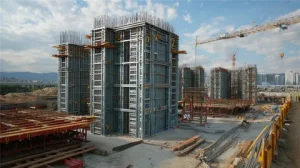
Birmingham’s growing skyline presents unique construction challenges. Limited working space, busy roads, nearby buildings, and protected historical sites require careful planning before work begins.
Many city-center developments operate within restricted footprints. As a result, contractors often use climbing or jump formwork systems. These advanced systems attach directly to the completed concrete structure and move upward as each floor is completed.
This approach offers several advantages:
- Requires less ground-level equipment.
- Reduces disruption to pedestrians and traffic.
- Improves construction efficiency.
- Minimizes the need for extensive scaffolding.
- Supports faster high-rise construction.
By adapting formwork to confined urban environments, contractors can complete complex projects while minimizing inconvenience to surrounding communities.
Safety Standards and Regulatory Compliance
Safety remains the highest priority during every stage of formwork installation. Because fresh concrete behaves like a liquid, it places significant pressure on the supporting framework. Every component must be engineered to withstand these forces safely.
In the UK, construction companies follow strict guidance from the Health and Safety Executive (HSE), British Standards, and Eurocodes. These regulations help reduce accidents while ensuring consistent construction quality.
Engineers carefully calculate several important factors before concrete placement, including:
- Concrete pouring speed.
- Hydrostatic pressure.
- Temperature conditions.
- Load distribution.
- Bracing requirements.
- Tie spacing.
- Prop positioning.
If concrete is poured too quickly or the support system is inadequately braced, a formwork blowout can occur. Such failures create serious safety hazards, cause project delays, and increase construction costs.
Therefore, regular inspections and continuous monitoring remain essential throughout the concrete pouring process.
The Importance of Proper Formwork Removal
Removing formwork is just as important as installing it. Concrete must achieve sufficient strength before supports are removed. Premature stripping may lead to cracking, deformation, or structural instability.
Engineers regularly monitor curing progress through strength testing and site inspections. Since the UK’s weather can vary significantly throughout the year, curing times often change depending on temperature, humidity, and environmental conditions.
Careful scheduling ensures that each structural element performs exactly as intended while maintaining worker safety throughout the removal process.
Technology Is Transforming Birmingham Formwork
Digital technology has significantly improved how contractors plan and install formwork systems. Building Information Modelling (BIM) has become an essential tool for many construction companies across Birmingham.
Using detailed 3D digital models, engineers can:
- Visualize complete construction sequences.
- Detect clashes between reinforcement and formwork.
- Improve material planning.
- Reduce installation errors.
- Increase onsite efficiency.
- Enhance communication between project teams.
This proactive planning minimizes costly modifications during construction and helps projects remain on schedule.
In addition, digital project management software allows engineers to monitor progress, coordinate deliveries, and maintain accurate quality control throughout every construction phase.
Supporting Sustainable Construction
Sustainability has become a major focus across the UK construction industry. Birmingham formwork continues to evolve by embracing environmentally responsible practices that reduce waste and improve resource efficiency.
Modern reusable systems support sustainability in several ways:
- Reduce timber consumption.
- Extend equipment lifespan through repeated reuse.
- Lower material waste.
- Reduce carbon emissions.
- Improve overall project efficiency.
Many contractors now rent modular formwork systems instead of purchasing new equipment for every project. After use, these systems can be refurbished and reused on future developments, supporting circular economy principles while lowering overall construction costs.
This shift benefits both the environment and project budgets, making sustainable formwork an increasingly attractive solution.
The Future of Birmingham Formwork
Construction technology continues to advance rapidly. Future formwork systems are expected to become even smarter, lighter, and more efficient. Manufacturers are developing innovative materials that increase durability while reducing weight, allowing faster installation with improved safety.
Automation, digital monitoring, and artificial intelligence may also play larger roles in future construction projects. These innovations will help contractors improve quality control, reduce risks, and optimize project performance.
As Birmingham continues to invest in housing, transport infrastructure, commercial developments, and urban regeneration, modern formwork systems will remain an essential component of successful construction projects.
Conclusion
Birmingham formwork forms the foundation of modern concrete construction. Although it remains a temporary structure, its influence on safety, precision, and structural performance is permanent. From selecting advanced materials to following strict safety standards, every stage of the formwork process contributes to stronger, more reliable buildings.
As construction techniques continue to evolve, formwork will remain at the heart of infrastructure development. Through reusable materials, digital planning, improved engineering, and sustainable practices, Birmingham’s construction industry is well positioned to deliver safer, faster, and higher-quality projects for many years to come.