
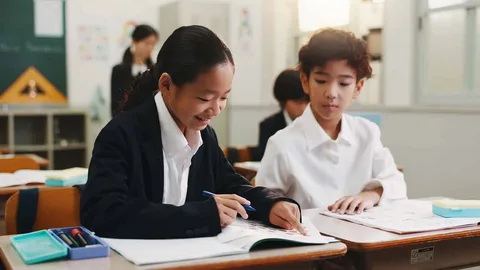
Choosing the right educational path for a child is one of the most critical decisions parents face today. In an increasingly interconnected global community, the ability to communicate across cultures is a valuable asset. Many families in local neighborhoods are discovering that enrolling their little ones in a best bilingual Chinese school in Middle Village
Choosing the right educational path for a child is one of the most critical decisions parents face today. In an increasingly interconnected global community, the ability to communicate across cultures is a valuable asset. Many families in local neighborhoods are discovering that enrolling their little ones in a best bilingual Chinese school in Middle Village offers an exceptional foundation for future academic and social success. This educational approach goes beyond simple language acquisition; it fosters cognitive flexibility, cultural appreciation, and enhanced problem-solving skills from an early age.
The Cognitive Benefits of Early Dual-Language Immersion
Research consistently shows that learning two languages simultaneously stimulates brain development in unique ways. Children who engage in bilingual programs often demonstrate superior executive function, better memory retention, and enhanced multitasking capabilities compared to their monolingual peers. By navigating two distinct linguistic systems daily, students build mental agility that translates seamlessly into better performance across all academic subjects, including mathematics and the sciences.
Strengthening Memory and Focus
Classrooms designed for dual-language instruction require students to switch fluidly between Mandarin and English. This constant mental adjustment acts as a workout for the brain, strengthening neural pathways responsible for concentration and cognitive control. Over time, students develop an impressive ability to filter out distractions and focus deeply on complex tasks.
Boosting Problem-Solving Skills
When learners encounter unfamiliar concepts in two languages, they approach challenges from multiple perspectives. They learn to analyze problems creatively, finding alternative ways to express ideas or understand instructions. This adaptability nurtures resilient learners who are not afraid to tackle difficult concepts.
Cultivating Global Awareness and Cultural Empathy
Language is deeply intertwined with culture. Immersing students in a Mandarin environment allows them to appreciate traditions, histories, and perspectives that differ from their own. This exposure builds profound empathy and global awareness, preparing them to thrive in a diverse, multicultural world.
Fostering Open-Mindedness
Interacting with peers and teachers from varied backgrounds teaches children to value inclusivity. They realize that there are many valid ways to view the world, which naturally reduces bias and encourages collaborative teamwork in group settings.
Connecting with Heritage
For families with Chinese roots, a bilingual environment provides a meaningful bridge to their ancestral heritage. Children can converse comfortably with grandparents and extended family members, preserving cultural traditions and building a strong, confident sense of personal identity.
What to Look for in Quality Bilingual Programs
Selecting the right institution requires careful consideration of various factors. Parents should look for nurturing environments where educators possess both native fluency in Mandarin and formal training in early childhood pedagogy. The curriculum should seamlessly integrate language learning into daily activities rather than treating it as a separate, isolated subject.
Play-Based and Interactive Learning
Young children learn best through active participation, hands-on projects, and social play. Programs that blend structured lessons with creative storytelling, music, and art ensure that language acquisition feels natural, enjoyable, and entirely stress-free.
Supportive Class Sizes
Smaller groups allow teachers to provide individualized attention, ensuring that every student receives the guidance needed to progress at their own comfortable pace. Individual support builds confidence and encourages reluctant learners to speak up.
Preparing Students for Future Academic Milestones
The advantages of early bilingualism extend far beyond childhood. As these students transition into higher education and the global workforce, their linguistic competence gives them a distinct competitive edge. Universities and employers increasingly value candidates who can communicate fluently in Mandarin, opening doors to international careers and diverse professional networks.
Building Long-Term Academic Resilience
Because dual-language learners are accustomed to decoding complex information, they typically approach advanced high school and college coursework with greater self-assurance. They view difficult subjects not as roadblocks, but as manageable challenges to master.
Frequently Asked Questions
What makes a school the best bilingual Chinese school in Middle Village?
A top-tier institution combines certified native-speaking educators, an immersive yet nurturing curriculum, and a balanced focus on academic rigor and social-emotional growth. This holistic environment helps children master both Mandarin and English while building lifelong confidence.
At what age should children start attending a bilingual program?
Early childhood is the optimal window for language acquisition. Enrolling children between the ages of two and five allows them to absorb sounds, tones, and grammatical structures naturally, often achieving near-native fluency without formal studying.
Will learning two languages confuse or delay my child’s speech?
Numerous studies confirm that bilingual education does not cause speech delays. While young learners might occasionally mix vocabulary words during the initial adjustment phase, their brains quickly sort the two systems, resulting in advanced communication skills over time.
How do educators ensure children are learning effectively in both languages?
Instructors utilize visual aids, contextual cues, interactive storytelling, and consistent daily routines. By balancing Mandarin and English instruction evenly across various activities, they ensure comprehensive understanding and steady progress.
How can parents support dual-language learning at home?
Families can reinforce classroom concepts by incorporating Mandarin media, reading bilingual books together, and encouraging open conversations. Partnering closely with educators ensures consistency between home life and the learning center.
Summary
Investing in early bilingual education provides children with invaluable cognitive, cultural, and professional advantages. Families seeking a supportive and academically enriching environment often find that choosing the best bilingual Chinese school in Middle Village sets their children on a path toward lifelong success. By blending immersive Mandarin instruction with playful, engaging methods, these programs nurture confident, globally-minded individuals ready to embrace future opportunities.