
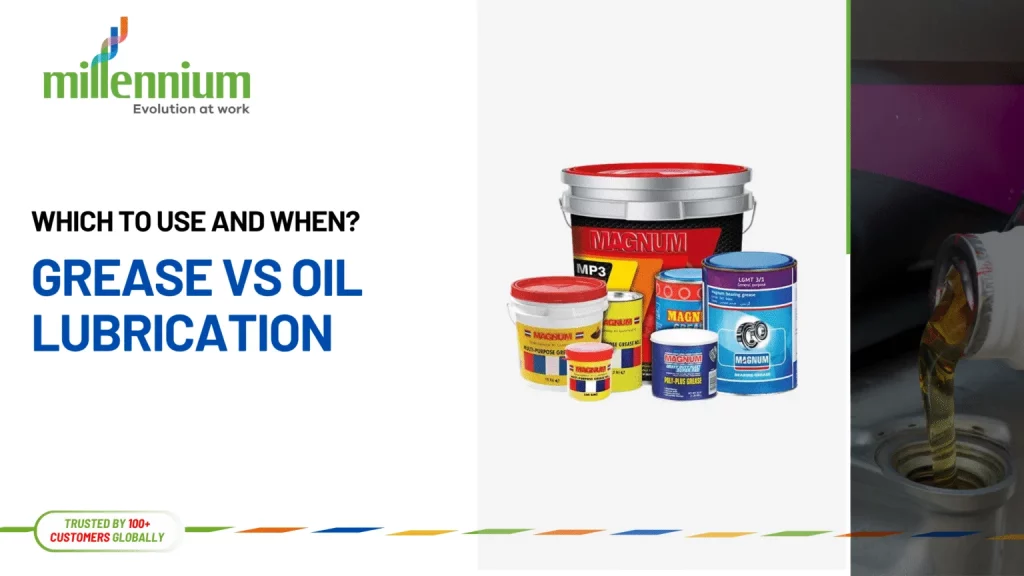
Introduction Lubrication plays a vital role in ensuring the smooth and efficient functioning of machines and equipment. Whether in industrial settings, automotive applications, or precision instruments, proper lubrication reduces friction, minimizes wear, and extends equipment life. However, one common question faced by engineers and maintenance teams is whether to use grease or oil for a
Introduction
Lubrication plays a vital role in ensuring the smooth and efficient functioning of machines and equipment. Whether in industrial settings, automotive applications, or precision instruments, proper lubrication reduces friction, minimizes wear, and extends equipment life. However, one common question faced by engineers and maintenance teams is whether to use grease or oil for a particular application. Both serve the same purpose to lubricate moving parts but differ in composition, behavior, and performance under various conditions. Choosing the right lubricant can make the difference between optimal operation and costly breakdowns.
Basics of Lubrication
Lubrication involves creating a thin film between two surfaces in relative motion to reduce direct metal-to-metal contact. This film minimizes friction, dissipates heat, and protects against corrosion and contaminants.
There are two primary forms of lubricants oils and greases:
- Oil Lubrication: Oils are fluid lubricants composed of base oil and additives. They can be mineral-based, synthetic, or semi-synthetic. Oil flows easily, making it suitable for high-speed applications where continuous circulation is required.
- Grease Lubrication: Grease is essentially a semi-solid lubricant, consisting of oil blended with a thickener (like lithium, calcium, or polyurea) and additives. It acts as a sponge the thickener holds the base oil in place and releases it slowly during operation, ensuring long-term lubrication.
The main goal of both lubricants is the same to reduce friction and wear but how they achieve it differs significantly depending on the machinery, environment, and operating conditions.
Differences Between Oil and Grease
Although grease and oil share the same core function, their physical properties and performance characteristics differ. Below are the key distinctions:
| Aspect | Oil Lubrication | Grease Lubrication |
|---|---|---|
| State | Liquid | Semi-solid |
| Mobility | High flows easily through systems | Limited — stays in place |
| Heat Dissipation | Excellent carries heat away efficiently | Poor — retains heat |
| Contamination Protection | Requires seals or filters | Seals against dirt and moisture |
| Maintenance Frequency | Requires regular monitoring and top-ups | Longer intervals between relubrication |
| Application Method | Circulation, splash, or mist systems | Manual or automatic greasing |
| Typical Use | High-speed, high-temperature applications | Slow-speed or intermittent operations |
In simple terms, oil is best for continuous lubrication and heat dissipation, while grease excels at sealing, staying in place, and providing protection in harsh environments.
Use Cases for Grease and Oil
Selecting between grease and oil depends largely on the machine type, operating speed, temperature, environment, and maintenance strategy. Let’s explore the typical use cases for each:
1. When to Use Oil Lubrication
- High-Speed Applications: Machines that operate at high speeds, such as turbines, compressors, and spindles, require oil. Oil’s fluid nature ensures a continuous supply of lubricant to fast-moving parts without causing drag.
- Heat Dissipation Needs: In systems that generate significant heat, oil circulation helps absorb and carry away excess heat. Gearboxes, engines, and hydraulic systems benefit from oil’s superior cooling capacity.
- Cleanliness Requirements: Oil lubrication systems can be filtered and monitored for contamination. In precision instruments or clean manufacturing environments, oils maintain better cleanliness and control.
- Automated or Centralized Lubrication Systems: Many industrial plants use centralized oil lubrication systems for convenience and consistency. These setups continuously circulate oil to bearings, gears, and pumps, ensuring reliable performance.
2. When to Use Grease Lubrication
- Difficult-to-Reach Components: In areas where regular maintenance is challenging, grease is ideal. It stays in place longer, making it perfect for bearings, joints, or parts enclosed within sealed housings.
- Contaminated or Moist Environments: Grease forms a barrier against water, dust, and contaminants. It’s commonly used in outdoor machinery, automotive chassis, and agricultural equipment.
- Intermittent Operation: Equipment that operates intermittently or experiences long idle periods benefits from grease. Since grease doesn’t drain away like oil, it provides consistent protection even when the machine is not running.
- Shock Load Conditions: For machinery subject to heavy loads or vibrations — such as construction equipment, wheel bearings, and mining machinery grease provides a cushioning effect and stays intact under stress.
Decision Matrix for Choosing Lubrication
Choosing between grease vs oil lubrication requires evaluating various factors. Below is a simplified decision matrix to guide your selection:
| Criteria | Use Oil | Use Grease |
|---|---|---|
| Operating Speed | High (e.g., turbines, spindles) | Low to moderate (e.g., bearings, hinges) |
| Temperature | High (>120°C) | Moderate (<120°C) |
| Heat Dissipation Need | Essential | Not critical |
| Contamination Risk | Low or controlled environment | High (dust, moisture exposure) |
| Maintenance Accessibility | Easy to access | Difficult to access |
| Lubrication Frequency | Continuous | Intermittent |
| Load Type | Light or steady | Heavy or shock loads |
| System Type | Circulating lubrication systems | Sealed or limited-access components |
In general:
- Choose oil for speed, temperature, and efficiency.
- Choose grease for protection, longevity, and simplicity.
However, some modern systems combine both using oil for main lubrication and grease seals for secondary protection, optimizing performance in complex environments.
Summary
Both grease and oil play indispensable roles in machinery lubrication. The decision between the two isn’t about which is superior but which is more suitable for your operating conditions.
- Oil lubrication provides excellent flow, cooling, and continuous coverage, making it ideal for high-speed, high-temperature, or precision systems.
- Grease lubrication, on the other hand, offers better sealing, longer service intervals, and stability under harsh or inaccessible conditions.
When choosing between the two, consider speed, load, temperature, environment, and maintenance capabilities. Matching the lubricant type to these factors ensures reliability, reduces wear, and extends the lifespan of equipment.
In short, use oil where movement and heat demand circulation, and grease where stability and protection are priorities. Understanding these differences allows industries to make smarter lubrication choices — improving performance, efficiency, and long-term equipment health.