
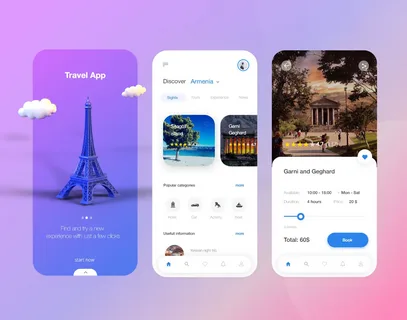
Most travel apps don’t fail because people aren’t traveling. They fail because users don’t trust the experience enough to complete a booking. The pattern is familiar. A user installs a travel app, explores flights or hotels for a minute, compares prices, and then leaves without booking. This happens repeatedly across markets, regardless of how much
Most travel apps don’t fail because people aren’t traveling. They fail because users don’t trust the experience enough to complete a booking.
The pattern is familiar. A user installs a travel app, explores flights or hotels for a minute, compares prices, and then leaves without booking. This happens repeatedly across markets, regardless of how much money businesses spend on design or marketing.
At some point, product teams realize the issue is not visibility or downloads. It is conversion. This is where many companies turn to travel app development services, hoping better technology will fix declining engagement and stalled bookings. But technology alone is not the solution. The real problem sits deeper in the user journey.
Apps that fail to convert usually share the same hidden weaknesses: friction, uncertainty, and lack of confidence.
The Real Reason Users Abandon Travel Apps
Travel planning is not casual browsing. It involves money, time, and emotional investment. When users hesitate, even briefly, they leave.
Common issues that break conversion include:
- Confusing or cluttered search flows
- Pricing that changes late in the journey
- Lack of real-time availability or updates
- Generic recommendations that feel irrelevant
- Limited trust signals during payment
- Weak or delayed customer support
Each of these issues may seem small individually, but together they create doubt. And doubt kills bookings.
Research shows that apps addressing these gaps saw booking completion increase by nearly 21% within a year. The difference wasn’t aggressive marketing. It was experience design.

What High-Converting Travel Apps Do Differently
Modern travel apps that convert consistently focus on reducing decision fatigue and building trust at every step.
They don’t overwhelm users with options. They guide them.
High-performing apps usually include:
All-in-one booking
Users expect to search, compare, and book flights, hotels, and activities without switching platforms. Fragmentation increases drop-offs.
Real-time updates and alerts
Live pricing, availability, delays, and gate changes reassure users that the app is reliable.
Offline accessibility
Travel happens in low-connectivity environments. Access to itineraries and maps without internet builds confidence.
Personalized recommendations
AI-driven suggestions based on behavior shorten decision time and increase engagement.
Secure in-app payments
Clear pricing, visible policies, and trusted payment methods reduce abandonment at checkout.
Reviews and community validation
Social proof lowers risk perception and accelerates decision-making.
24/7 in-app support
Immediate help during critical moments prevents cancellations and frustration.
These features don’t just improve usability. They directly impact revenue.
Why Travel App Features Influence Business Growth
For travel brands, conversion problems usually signal operational issues beneath the surface.
Businesses struggling with low bookings often face:
- Manual booking errors and delays
- Missed revenue outside business hours
- Difficulty managing multiple suppliers
- Poor engagement during active trips
- Limited insight into customer behavior
A well-built travel app solves these issues by centralizing operations, automating workflows, and creating a consistent brand experience.
This is why investing in professional travel app development services is no longer optional for growing travel businesses. The app becomes the core business engine, not just a digital brochure.
Execution Matters More Than Ideas
Many companies know which features a travel app should have. Very few execute them correctly.
Poor execution shows up as:
- Slow loading times
- Inconsistent UX across devices
- Features that exist but aren’t adopted
- Data that isn’t used to personalize journeys
Successful apps are not feature-heavy. They are purpose-built.
Prioritize speed, clarity, and relevance. They test flows continuously. They measure drop-offs, not just downloads. And they refine experiences based on real user behavior, not assumptions.
This execution gap is where experienced development partners create real value.
Why Travel App Features Drive Business Growth
Travel brands usually turn to professional development teams when manual bookings, missed after-hours revenue, or fragmented user experiences start limiting growth. A well-planned travel app improves engagement during the trip, strengthens brand trust, and increases repeat bookings.
The difference isn’t the idea — it’s execution. Apps built with a user-first approach consistently see longer session times, better retention, and stronger ROI.
Turning Browsers into Bookers
The goal of a travel app is not engagement for its own sake. It is completed bookings and repeat usage.
Apps that convert focus on:
- Reducing steps between search and payment
- Showing total prices early
- Reinforcing trust before checkout
- Supporting users during the trip, not just before it
When users feel guided instead of pushed, conversion follows naturally.
This approach also increases lifetime value. Travelers who trust an app return for future trips, recommend it to others, and rely on it during travel rather than switching platforms.
Why This Matters Now More Than Ever
The travel market is crowded. Users compare multiple apps before booking. Switching costs are low.
If your app creates even minor friction, users leave.
That’s why feature decisions, UX clarity, and technical execution directly affect business outcomes. Travel apps that solve real user problems outperform competitors relying on surface-level design improvements.
These insights are explored in depth in Top 10 Features Every Modern Travel App Should Have in 2026, where we break down which features actually move conversion metrics and how businesses can implement them correctly to reduce drop-offs and drive sustainable growth.