There is a singular moment in every runner’s journey when the music, the visuals, and your own heartbeat sync so perfectly that the screen seems to dissolve. Your fingers stop consciously pressing keys; they simply move. This experience isn’t about high scores or online bragging rights. It is about flow—that pure, hypnotic state where a
There is a singular moment in every runner’s journey when the music, the visuals, and your own heartbeat sync so perfectly that the screen seems to dissolve. Your fingers stop consciously pressing keys; they simply move. This experience isn’t about high scores or online bragging rights. It is about flow—that pure, hypnotic state where a geometric icon becomes a direct extension of your reflexes. Nowhere is that state purer than in the first, seemingly impossible jump of a high-difficulty “Demon” level.
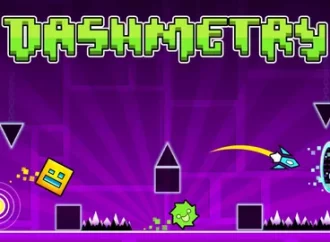
If you have never touched a rhythm platformer, the kaleidoscopic chaos of a game like Geometry Dash can look terrifying. Behind the flashing neon lights and the thumping bass lies one of gaming’s most honest and elegant mechanics: the single-tap jump. You do not need a controller with eighteen buttons or a complex spreadsheet of stats. You only need a click, a tap, or a press of the spacebar. The challenge here isn’t complexity; it is absolute precision. Learning to experience that challenge with joy—rather than just trying to survive it—is an art form worth mastering.
The Anatomy of a Tap: Moving Beyond Reaction
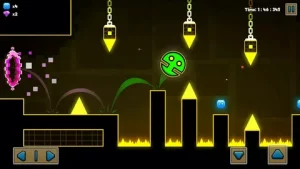
To truly master the geometry jump, you first have to reframe what “playing” actually means. This is not a power fantasy where you bulldoze through obstacles like a tank. Instead, it is a dance. Whether your character is a square, a ship, a ball, or a wave, the ground is essentially a single line of musical notation stretched across your screen. Every spike, block, and portal is a note waiting for you to hit it.
The most common beginner mistake is treating the game like a pure test of reaction speed. If you watch a professional player “sight-read” a new level and react to spikes as they appear, you are actually missing the point. They aren’t reacting; they are remembering.
The geometry of the level never changes. The spikes never move. The game gives you a static, unchanging pattern and asks you to internalize its rhythm until the physical input becomes involuntary. Here is how to start:
-
Close Your Eyes: When you load a new level, listen to the drum kicks and the synth swells. That bass drop is not just atmosphere; it is your cue.
-
Find the Snare: Level designers build the architecture around specific sounds. If a jump kills you repeatedly, notice how it likely lands exactly on a snare hit or a vocal chop.
-
Look Ahead: Do not stare at your icon. Scan the space ahead of it. Your eyes should feed spatial information to your thumb without your conscious brain getting in the way.
The Practice Mode Mindset: Redefining Progress
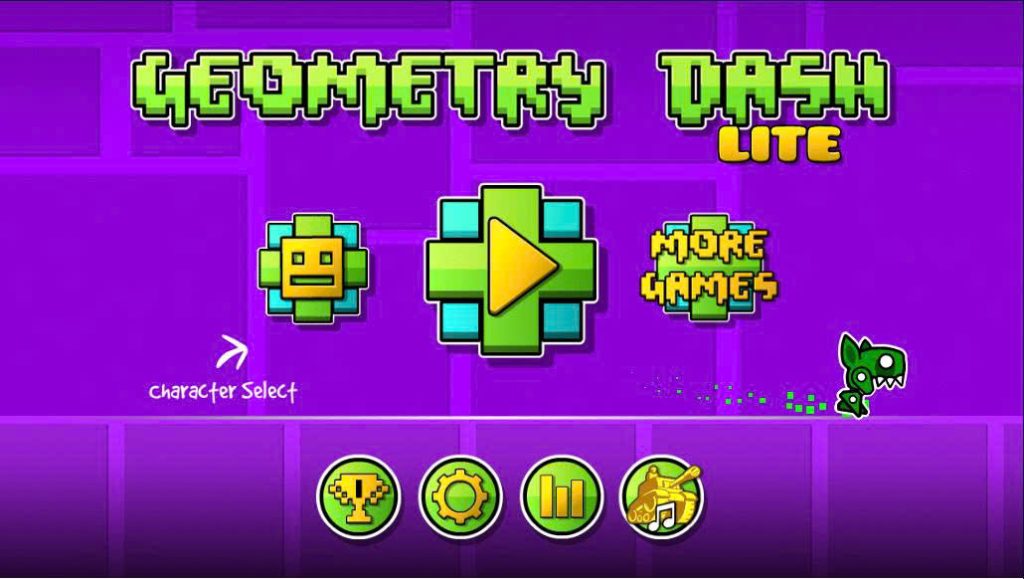
The most profound shift in how you experience a level comes when you abandon the expectation of completion. The main menu offers a Practice Mode, and avoiding it is the single greatest barrier to having fun. Many new players see practice as an admission of failure—a “lesser” version of the real run. In the world of rhythm gaming, however, practice mode is the game.
There is a meditative quality to this repetition. Eventually, your frustration peaks and then dissolves. The sequence that once looked like a jumbled mess of jagged teeth starts to make geometric sense. You begin to see the invisible grid beneath the art.
In ship sections, you will learn that releasing the key is just as vital as pressing it. You begin to realize that falling is a controlled action, not a punishment. When you disconnect the action from the anxiety of messing up a long run, you tap into a childlike state of “try and see.” That curiosity is where the fun lives.
Pro Tips for a Seamless Ride
Once you have adjusted your mindset, the physical details and environment matter. To reach a true flow state, you need to curate your sensory space.
1. Optimize Your Setup
Physical lag is the enemy of rhythm. Wireless headphones and keyboards often introduce a microsecond of latency. While small, that delay breaks the hypnotic connection between sound and sight. Wired audio is non-negotiable if you want a seamless experience. If you play on a laptop, consider plugging in a dedicated mouse, as “mushy” laptop keys can feel unresponsive during rapid-fire sections.
2. Customization as Therapy
Customizing your icon is not just about looking cool; it is about visual clarity. After a hundred deaths against a fiery red background, your eyes will naturally fatigue. Use the settings to create high contrast:
-
Colors: Try a neon green icon against a dark purple background.
-
Simple Shapes: Choose a square that doesn’t have distracting animations. This makes the “hitbox” easier for your brain to track.
-
Reduce Flashes: Turn off distracting background flashes if they pull your focus away from the beat.
3. Shift the Goalpost
Stop aiming for 100% every time you sit down to play. A level becomes infinitely more enjoyable when you celebrate small victories. Celebrate when you stick the landing on a difficult transition or finally understand a tricky gravity flip. A geometry jump is not just a finish line; it is a collection of tiny, perfect harmonies.
The Perfection of the Loop
There is a unique moment that exists only in this specific style of gaming. It is the silence that follows a frustrated slam of the spacebar, followed immediately by a compulsive, instinctive restart. You often click “Retry” before the death animation even finishes.
The geometry does not judge you. It is a rigid, unchanging puzzle of shapes and rhythm. In this environment, you are the only variable. The more you let go of the outcome and sink into the loop—die, learn, repeat—the closer you get to that elusive state of mastery.
Soon, the jump feels less like a command your brain sends to your finger and more like a note the universe is playing. Your hand simply becomes the instrument. This isn’t just playing a game; it is experiencing a piece of interactive music, one spectacularly interesting jump at a time.