
There is something quietly addictive about a game that asks for nothing but a few minutes of your time. It rewards you with instant adrenaline and a sense of accomplishment. Many people stumble onto the greens of a local course expecting a typical afternoon time-waster. They think of it as something to click through or
There is something quietly addictive about a game that asks for nothing but a few minutes of your time. It rewards you with instant adrenaline and a sense of accomplishment. Many people stumble onto the greens of a local course expecting a typical afternoon time-waster. They think of it as something to click through or walk through during a quick break. Instead, they find themselves hunched forward, muttering at a brightly colored ball. They end up celebrating a last-second shot as if they had actually won a major championship in real life.
If you are new to the world of the miniature court or just looking to shake off the rust, let’s walk through the experience together. No showboating is allowed here; we are focusing on pure, stripped-down fun. Miniature golf is more than just a hobby. It is a masterpiece of simple design and high-stakes tension.
The Flow of the Game: Simplicity Meets Strategy
At its core, this game puts you in charge of a single mission. You face off against a series of physical puzzles or perhaps another real person. The elegance lies in the simplicity of the objective. You aim, you swing, you navigate obstacles, and you try to outthink the designer of the course. There are no complicated rosters to manage or massive playbooks to memorize. It is just you, the putter, and a handful of movements that quickly become second nature.
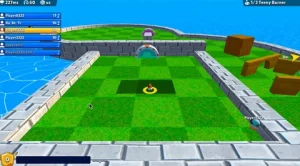
On the offensive side, the mechanics are intuitive but require intense focus. You position your feet by stepping left or right. You can gauge the strength of your hit with a quick practice swing. Launching the ball toward the hole requires holding your breath and releasing your stroke at the exact right moment. The physics of the green can move fast—it can even feel genuinely unfair at first. Your first few attempts will likely clang off a brick or disappear into a water hazard. That is perfectly fine. The game teaches you patience through small failures. You learn to recognize the perfect path through muscle memory rather than by reading long tutorials.
Defense in this game is more about mental fortitude. You try to stay calm while your opponent makes their move. You avoid the temptation to rush your next shot. The trick is to avoid chasing perfection constantly. Watch the slopes of the artificial turf and anticipate how the ball will roll. Wait for the slight curve that reveals the hidden break in the path. Getting a clean “hole in one” often feels far more satisfying than winning a complex strategy game.
Reading the Rhythm of the Green
If you force the action, the course pushes back. If you allow the play to progress, chances arise organically. In a group setting, that rhythm shifts again. You are suddenly accountable to your friends or family. Taking turns becomes essential, and being a “ball hog” is impossible by design. The chemistry between players, even if they are strangers, creates moments that feel genuinely cooperative. Moving in perfect sync with the flow of the game without saying a word is one of the best parts of the experience.
Practical Tips for the Aspiring Pro
If you want to improve your game without practicing for hours, focus on these small, plain adjustments. These are not shortcuts, but they will reduce the frustration of learning the ropes:
-
Master the Short Game: Everyone wants to hit a long, powerful shot, but the game is most forgiving near the hole. Step closer to the target and practice a gentle follow-through.
-
The Bank Shot Strategy: Sometimes, a straight line is a trap. Faking out the course by using the side rails can give you a better angle. Wait for the right moment to use the bounce to your advantage.
-
Embrace the Pause: Standing still often helps you see things your eyes missed while moving. A simple second of observation often reveals the wrong way the green is leaning.
-
Protect Your Score: Getting a steady “two-putt” is significantly better than risking a “six-putt” by trying a hero shot. If you have to play it safe, make sure you aim for a spot that sets up an easy next move.
-
Manage Your Focus: Tension drains your energy and ruins your aim. A stressed player hits poorly and loses their touch. Use deep breaths strategically rather than constantly.
Why the Simple Approach Works
This game is not trying to be a complex simulation of a professional tour. It is a quick, clean arcade-style experience that respects your time. It lets you focus entirely on the head-to-head tension. Whether you play for fifteen minutes or an hour, the core loop stays crisp. You will miss, you will learn, and you will eventually hit a lucky shot that makes you feel like a genius.
That is the beauty of the sport. There is no heavy pressure and no aggressive marketing shoving gear in your face. It is just the game, stripped down to its essentials. If you give it a genuine try without expecting perfection, you might find yourself enjoying the process as much as the victories.
Bringing It All Together
Miniature golf does not aim to replace the massive scale of a professional course. Instead, it offers something refreshingly simple: quick, joyful action that rewards skill without punishing mistakes too harshly. There is no massive barrier blocking the core gameplay and no interruption to your fun.
Whether you are a longtime fan of the sport or someone who has never held a real club, the game meets you where you are. It is social, highly repeatable, and endlessly satisfying when you finally string together a perfect sequence of moves. It stands as a promising option for anyone seeking a blend of physical action and casual accessibility in their everyday environment.
The Future of Casual Competition
As we move forward, the demand for these types of experiences only grows. People want activities that provide a sense of community without a massive time commitment. This game fits that need perfectly. It bridges the gap between digital entertainment and physical reality. It allows us to step away from our screens and engage with the world in a tactile way.
By focusing on the fundamentals, we can find a deeper appreciation for the simple things. We learn that success is not always about strength. Often, it is about the gentle touch and the ability to stay calm under pressure. These lessons stay with us long after we leave the course. They remind us that even the smallest jump can lead to a spectacular victory if we take the time to aim correctly.
In the end, the game is what you make of it. It can be a fierce competition or a relaxing stroll. It can be a way to bond with a child or a way to challenge a colleague. No matter how you play, the goal remains the same: enjoy the moment, one swing at a time. Through this lens, we see that the most basic games are often the ones that stay with us the longest. They offer a timeless escape into a world of color, geometry, and pure, unadulterated joy.