

st It’s 3 AM in a nondescript building in Ashburn, Virginia. A power supply fails in Rack 42B07, taking down a cluster of servers handling 30% of your online transactions. Your Network Operations Center sees the red alerts, but they’re 1,500 miles away. This is the precise moment where Data Center Smart Hands Services transform
st It’s 3 AM in a nondescript building in Ashburn, Virginia. A power supply fails in Rack 42B07, taking down a cluster of servers handling 30% of your online transactions. Your Network Operations Center sees the red alerts, but they’re 1,500 miles away.
This is the precise moment where Data Center Smart Hands Services transform from a contractual line item into your most valuable business continuity asset. These services provide the critical human link between your remote IT command center and the physical reality of your infrastructure. This guide explores the scope, strategic value, and operational execution of these indispensable services.
Defining the Mission
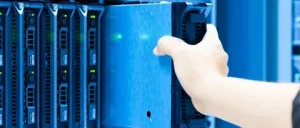
Data Center Smart Hands Services refer to skilled, onsite technicians who perform physical IT tasks within a facility on behalf of a remote owner. They act as the “eyes, ears, and hands” for organizations that choose not to maintain 24/7 local staff at every site.
The role is defined by its physicality and precision:
- Physical Task Execution: These services handle what remote interfaces cannot, such as installing servers or tracing fiber cables.
- Vendor-Neutral Expertise: Technicians are trained on multi-OEM hardware. They must adapt quickly to diverse environments.
- Process-Oriented Work: They follow detailed “runbooks” provided by the customer’s remote IT team or a Managed NOC Services provider.
- Facility-Aware Operation: They must comply with the specific security and safety requirements of each unique data center provider.
This service addresses help desk problems where the ticket ends with a requirement for physical intervention.
The Core Service Catalog
The scope of work covers the entire hardware lifecycle and emergency response.
Hardware Lifecycle Management
- Racking and Stacking: Technicians install new equipment according to detailed diagrams and torque specifications. This includes mounting rails and implementing cable management.
- Decommissioning: This involves powering down and removing legacy equipment. It often includes secure data sanitization and preparing assets for resale.
- Component Replacements: Technicians hot-swap failed components like hard drives, power units, or cooling fans. This is the most common reactive task.
Physical Layer and Infrastructure Support
- Structured Cabling: This includes running, labeling, and troubleshooting copper and fiber optic cabling. Technicians also manage patch panels and verify light levels.
- Power Management: Staff verify PDU outlet assignments and assist with circuit upgrades. They also perform controlled power cycles on specific devices.
- Environmental Audits: Technicians perform visual inspections for hot spots and verify airflow components. They also document rack layouts with photographs.
Remote Support Facilitation
- Console Access: Technicians connect KVM consoles to provide remote engineers with BIOS-level access. This is vital when out-of-band management fails.
- Vendor Escort: They provide secured access for third-party technicians or auditors. The smart hands tech ensures all vendor work complies with facility standards.
- Logistics: This involves accepting deliveries and inspecting them for damage. Technicians then transport the equipment to the correct staging area.
The Strategic and Financial Imperative
The Cost of Downtime
The business case is fundamentally financial. Recent studies show the average cost of data center downtime now exceeds $8,851 per minute. A simple task like reseating a cable can result in seven-figure losses if delayed by travel. Smart hands services provide a guaranteed SLA for response, directly capping this financial risk.
The Expertise Conundrum
Maintaining in-house staff with 24/7 expertise across multiple locations is prohibitively expensive. A full-time onsite engineer can cost over $150,000 annually per location. Smart hands services provide this expertise on-demand, converting a fixed cost into a scalable operational expense.
Integration with the Modern IT Stack
The true power of smart hands is unlocked through integration with management systems.
Orchestration with Managed NOC
This is where reactive support becomes proactive intelligence. The ideal workflow looks like this:
- Detection: An AIOps platform detects a storage controller predicting a drive failure.
- Automation: The system generates a detailed ticket with the facility ID and serial number.
- Dispatch: The ticket is routed to a local technician.
- Execution: The technician performs the swap during a scheduled window using a pre-positioned spare.
- Verification: The NOC confirms the alert has cleared and closes the loop.
Compliance and Audit Readiness
Professional smart hands services provide documented evidence of every action. They track who accessed what and when. This turns a compliance burden into a managed, transparent process.
Selecting a Provider
Choosing a provider is a critical risk decision. Look for these core competencies:
- Technical Proficiency: Require evidence of certifications like CompTIA or Cisco. Ask about their experience with your specific hardware.
- Reliability: Verify that “coverage” means a dedicated local technician, not just a dot on a map. Ensure the SLA defines “onsite time” rather than just “response time.”
- Security: Ask about background checks and credential management. They should carry ample liability insurance and comply with regulations like SOC 2 or HIPAA.
- Communication: Ensure their ticketing system can integrate with yours via API. Look for providers who offer proactive status updates.
Implementing for Success
1st Phase: Preparation
- Create Runbooks: Document step-by-step instructions with photos. Store these in a secure, accessible location.
- Onsite Spares: Keep common failure items like SSDs and RAM in your cabinet. This turns a multi-day outage into a one-hour fix.
2nd Phase: Integration
- Ticketing: Connect your monitoring platform to the provider’s system for automated ticket creation.
- Dry Run: Execute a non-critical test task before a real emergency occurs. This validates the entire communication and execution process.
3rd Phase: Optimization
- Service Reviews: Analyze ticket trends to see if certain failures are recurring. Use this data to improve hardware choices.
- Refine Process: Update instructions based on lessons learned from actual incidents.
The Future of the Role
The future involves augmentation by intelligence rather than replacement by robots.
- Predictive Dispatch: AI will schedule technicians for preventive maintenance with increasing accuracy.
- Augmented Reality: Remote engineers will use AR glasses to see the technician’s field of view. They can then overlay instructions for complex repairs in real-time.
- Edge Specialization: As compute decentralizes, technicians will need skills for harsh, unmanned edge locations.