
In today’s fast-paced digital world, personal data functions as one of our most valuable assets. Every single time you browse a social media platform, you leave a digital footprint. Similarly, you share confidential details whenever you log into an online banking app, buy shoes on an e-commerce store, or download a new mobile application. This
In today’s fast-paced digital world, personal data functions as one of our most valuable assets. Every single time you browse a social media platform, you leave a digital footprint. Similarly, you share confidential details whenever you log into an online banking app, buy shoes on an e-commerce store, or download a new mobile application. This routine sharing means massive amounts of your personal details constantly float around the digital universe.
As online transactions multiply and virtual interactions grow, protecting this personal information has transformed from a minor concern into an absolute necessity. Businesses and hackers alike hunt for this information constantly. To address deep privacy concerns and regulate how entities handle personal data, India stepped forward with a landmark solution. The country introduced a massive legal framework known as the Digital Personal Data Protection Act, 2023.
This detailed article explores the current reality of the Data Protection Law in India. We will break down its key provisions, analyze your rights as an individual, examine strict business obligations, and evaluate how this law reshapes organizations across the country.
Defining the Data Protection Law in India
When we talk about the Data Protection Law in India, we are referring to the comprehensive legal framework that dictates exactly how organizations collect, process, store, and share digital personal data. The primary objective behind this law is straightforward. It aims to fiercely guard individual privacy rights. At the same time, it ensures that corporate organizations handle personal information with the utmost responsibility.
The true cornerstone of this legal framework is the Digital Personal Data Protection Act, 2023, widely known as the DPDP Act. For a long time, India relied on outdated sections of the Information Technology Act, 2000. However, those old rules could not keep up with modern technology. The DPDP Act completely changes the game. It establishes firm rules for any entity that processes digital information. Most importantly, it gives everyday citizens much greater control over their private lives.
Why Data Protection Matters Now More Than Ever
To understand the weight of this law, you must recognize what actually counts as personal data. Personal data represents any information that can identify you.
-
Your full legal name and physical home address.
-
Your primary phone numbers and personal email addresses.
-
Sensitive financial records, credit histories, and banking passwords.
-
Private health history, medical records, and fitness tracking information.
-
Official government identification numbers like Aadhaar or PAN details.
-
Your private online activity, search history, and real-time location data.
Without robust legal protections, this information becomes an easy target for malicious actors. Cybercriminals can steal your data to commit identity theft or execute financial fraud. Hackers can breach unsecured databases to launch devastating cyberattacks. Furthermore, companies can track your movements without your permission to conduct unauthorized corporate surveillance. Data protection laws solve this crisis. They build a shield around individual privacy and foster vital trust in digital services.
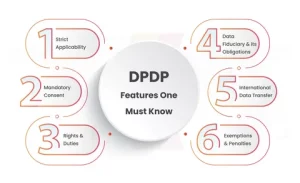
Core Features of the DPDP Act
The architecture of the DPDP Act relies on several core principles. These features create a fair balance between personal privacy and business innovation.
1. Consent-Based Data Processing
Under the new rules, companies cannot simply vacuum up your data whenever they want. Organizations must secure clear, unambiguous, and informed consent before they collect or process a single piece of information. The law mandates that businesses must explain their intentions plainly. Finally, they must declare exactly how long they intend to store it in their systems.
Furthermore, you can withdraw this consent whenever you choose. Your agreement must be completely free, highly specific, and given through a clear affirmative action.
2. Empowering Individual Rights
The DPDP Act formally calls individuals “Data Principals.” The framework empowers these individuals with a robust set of legal rights:
-
The Right to Access Information: You can demand that a company show you exactly what data they hold about you. They must also reveal who they have shared it with.
-
The Right to Correction: If a company stores inaccurate, incomplete, or outdated information about you, you can force them to correct it immediately.
-
The Right to Erasure: When a business no longer needs your data for the original purpose, you have the right to demand its total deletion.
-
The Right to Grievance Redressal: If a company misuses your data or ignores your requests, you can lodge an official complaint. The newly established Data Protection Board of India will investigate the matter.
Strict Obligations for Data Fiduciaries
The law uses the term “Data Fiduciaries” to describe organizations that decide the purpose and method of data processing. Because these businesses control your information, the law places a heavy burden of responsibility on their shoulders.
First, they must ensure the absolute accuracy and completeness of any data they process. Second, they must implement top-tier security safeguards to block unauthorized access. If a significant data breach occurs despite these safeguards, companies face immediate action. They must notify the Data Protection Board of India and all affected individuals right away without any delay. Finally, they must delete all personal records the moment the specified purpose finishes.
The framework also introduces an extra layer of safety for vulnerable groups. The law includes special, uncompromising provisions to protect children’s data. If an organization wants to process the personal information of anyone under eighteen years old, they must obtain verifiable parental consent. Companies are completely banned from tracking children’s behavior or targeting them with advertisements.
How the Law Impacts Businesses
The DPDP Act forces a massive shift in how businesses operate within India. Companies can no longer treat user data like a free commodity. Every organization must thoroughly review and overhaul its data management practices to stay fully compliant.
To avoid catastrophic consequences, businesses must update their public privacy policies to reflect plain, simple language. They need to redesign their user interfaces to secure valid, granular consent. Engineering teams must rebuild databases to keep them entirely secure against external threats. Companies must also conduct regular data protection audits and train their employees on privacy regulations.
If a business fails to comply, the penalties are incredibly severe. The government can impose staggering financial fines that reach up to hundreds of crores of rupees. Beyond the financial ruin, a major data breach can permanently destroy a company’s market reputation.
The Overwhelming Benefits of the Framework
While the transition requires effort, this law delivers massive benefits to the entire digital ecosystem. First, it radically enhances privacy protection by giving citizens ultimate control over their digital footprints. Second, it drives consumer trust. Customers prefer to do business with brands that explicitly respect their privacy.
Third, the law dramatically improves national cybersecurity. Because non-compliance costs so much money, companies willingly invest in stronger security infrastructure. This collective upgrade reduces the overall risk of country-wide cyberattacks. Finally, the framework creates a structured, safe, and transparent environment that supports long-term economic growth.
Overcoming Implementation Challenges
Despite the clear benefits, organizations still face a steep uphill battle during the implementation phase. Upgrading legacy systems to support data deletion and encryption requires a lot of money and time. Small startups and medium enterprises might struggle heavily with these compliance costs.
Furthermore, businesses must train thousands of employees to handle data carefully. Managing huge volumes of access and erasure requests from users will also strain customer support teams. To survive, businesses must view privacy as a core value rather than an annoying bureaucratic hurdle.
Looking into the Future
Technology never stops evolving, which means data privacy will remain a dynamic issue. The explosive rise of artificial intelligence, cloud computing, and big data analytics will create brand new privacy challenges.
India’s data protection framework will naturally evolve alongside these innovations. We can expect the government to introduce finer regulatory guidelines and stricter compliance standards over time. These upcoming advancements will continue to strengthen individual privacy rights and cement digital trust across the globe.
Conclusion
The Data Protection Law in India represents a monumental leap forward for privacy in our modern connected age. The DPDP Act successfully strips away corporate ambiguity and sets down clear, unyielding rules. It empowers everyday citizens while demanding total accountability from organizations. By prioritizing transparency and cybersecurity, this law creates a safe digital playground for everyone. Organizations that embrace these changes early will win consumer trust and thrive in India’s rapidly expanding digital economy.