
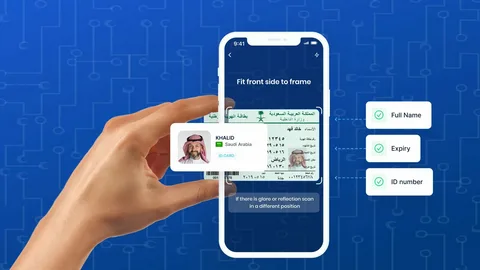
Every day, businesses verify countless documents before onboarding customers, approving vendors, processing financial transactions, or meeting regulatory requirements. Whether it’s a government-issued ID, passport, bank statement, business registration certificate, or proof of address, every document plays an important role in establishing trust. However, as businesses become more digital, document fraud has become increasingly sophisticated. Fraudsters
Every day, businesses verify countless documents before onboarding customers, approving vendors, processing financial transactions, or meeting regulatory requirements. Whether it’s a government-issued ID, passport, bank statement, business registration certificate, or proof of address, every document plays an important role in establishing trust. However, as businesses become more digital, document fraud has become increasingly sophisticated. Fraudsters can now manipulate images, alter personal information, forge certificates, and create fake identity documents that are difficult to detect through manual inspection alone.
Relying solely on manual verification is no longer enough. It consumes valuable time, requires significant human effort, and increases the risk of human error. For businesses handling hundreds or even thousands of documents every day, manual verification can quickly become a bottleneck that delays customer onboarding and operational workflows. More importantly, failing to identify fraudulent documents can lead to financial losses, compliance violations, legal complications, and damage to a company’s reputation.
This is where document verification software becomes an essential business tool. Powered by artificial intelligence, Optical Character Recognition (OCR), and intelligent fraud detection technologies, modern document verification solutions can analyze documents within seconds, validate their authenticity, and identify signs of tampering that might be impossible to detect manually.
In this guide, you’ll learn what document verification is, why it’s important, how document verification software detects fraud, and how DocProof by Antigravity Apps helps businesses automate document verification while improving security and compliance. Understand how document verification software authenticates documents, detects fraud, and improves KYC and AML compliance. Discover why automated document verification is becoming essential for modern businesses.
What Is Document Verification?
Document verification is the process of confirming that a document is genuine, valid, and has not been altered or manipulated. Businesses use document verification to verify the identity of customers, employees, vendors, and business partners before approving transactions or granting access to services.
Documents commonly verified include passports, driver’s licenses, Aadhaar cards, PAN cards, bank statements, utility bills, educational certificates, tax documents, business licenses, and many other official records. The goal is to ensure that the information presented is authentic and belongs to the person or organization submitting it.
Traditionally, document verification relied on manual review, where employees visually inspected documents and compared information against available records. While this method can work for a small number of documents, it becomes slow, inconsistent, and difficult to scale as business volumes increase. AI-powered document verification software automates this process, delivering faster, more accurate, and highly reliable verification.
Why Document Verification Is Important
As digital transactions continue to grow, identity fraud has become one of the biggest risks for businesses. Criminals use forged documents, altered identities, and counterfeit certificates to open fraudulent accounts, access financial services, bypass compliance requirements, and commit various forms of fraud.
A reliable document verification solution helps businesses detect these risks before they become costly problems. It strengthens Know Your Customer (KYC) and Anti-Money Laundering (AML) compliance, protects sensitive business operations, reduces operational costs, and creates a safer onboarding experience for legitimate customers.
Instead of spending hours manually checking documents, businesses can automate verification while maintaining high levels of accuracy and regulatory compliance.
Key Benefits of Document Verification Software
One of the biggest advantages of document verification software is speed. Manual verification may take several minutes or even hours depending on document complexity and staff availability. AI-powered verification systems analyze documents within seconds, allowing businesses to onboard customers much faster without sacrificing security.
Modern verification tools also provide significantly better fraud detection than manual inspection. Using artificial intelligence and image analysis, the software identifies altered text, manipulated images, inconsistent fonts, fake signatures, duplicated elements, and other visual anomalies that often indicate document fraud.
Another important benefit is regulatory compliance. Businesses operating in banking, fintech, healthcare, insurance, legal services, and other regulated industries must comply with strict identity verification requirements. Document verification software helps organizations meet KYC, AML, and other compliance standards while maintaining complete verification records.
Scalability is another major advantage. As businesses grow, the number of documents requiring verification also increases. Automated verification allows organizations to process thousands of documents efficiently without significantly increasing operational costs or hiring additional verification staff.
Many modern verification platforms also support Human-in-the-Loop (HITL) workflows. Documents that receive high confidence scores are automatically approved, while suspicious or low-confidence cases are flagged for human review. This combination of AI automation and expert oversight delivers both speed and accuracy.
How Document Verification Software Detects Fraud
The fraud detection process begins when a user uploads a document through a website, mobile application, or integrated API. Most verification platforms support multiple document formats, including scanned documents, PDFs, JPEGs, PNG files, and photographs captured using smartphones.
Once uploaded, the software automatically identifies the document type and extracts important information using Optical Character Recognition (OCR). Key details such as the holder’s name, date of birth, document number, address, issue date, and expiration date are captured with remarkable accuracy.
The system then analyzes the document’s security features. Advanced AI models inspect holograms, watermarks, microprinting, embedded security patterns, layout consistency, and other elements specific to official documents. At the same time, sophisticated fraud detection algorithms examine image quality, font consistency, character spacing, lighting conditions, shadows, cloned areas, editing traces, and signs of digital manipulation.
After completing visual analysis, the verification system cross-checks extracted information against trusted databases, issuing authorities, or available verification sources where integrations exist. The software validates document numbers, confirms expiration dates, and ensures that identity information remains consistent across multiple data points.
For identity verification, many platforms also perform biometric face matching by comparing the photograph on the identity document with a live selfie submitted during verification. This additional layer of security helps prevent identity theft and impersonation.
If the system detects unusual patterns or lacks sufficient confidence, the document is automatically routed for manual review. Human reviewers receive detailed reports containing extracted information, fraud indicators, confidence scores, highlighted anomalies, and supporting evidence, enabling them to make informed decisions quickly.
Detect Fraud Faster with DocProof by Antigravity Apps
At Antigravity Apps, we’ve developed DocProof to simplify and strengthen document verification for modern businesses. DocProof is an AI-powered document verification solution that combines OCR technology, intelligent fraud detection, AWS serverless architecture, and automated workflows to verify documents quickly and accurately.
Whether you’re verifying customer identities, onboarding vendors, processing compliance documents, or reviewing business records, DocProof helps automate the entire verification process while reducing manual effort. The platform integrates seamlessly into existing applications, customer onboarding systems, and business workflows, allowing organizations to scale verification without compromising security.
Designed for industries such as fintech, banking, healthcare, insurance, legal services, and enterprise operations, DocProof helps businesses detect fraud earlier, improve compliance, reduce operational costs, and accelerate customer onboarding with confidence.
Final Thoughts
Document fraud continues to evolve, making traditional manual verification increasingly difficult and inefficient. Businesses that rely on outdated verification methods expose themselves to financial losses, compliance risks, operational delays, and reputational damage.
AI-powered document verification software provides a faster, smarter, and more reliable approach by automating document analysis, detecting sophisticated fraud attempts, improving regulatory compliance, and supporting high-volume verification with minimal manual effort.
With DocProof by Antigravity Apps, businesses gain access to an intelligent document verification platform designed to streamline identity verification, strengthen fraud detection, and support secure digital operations. Whether you’re processing dozens or thousands of documents, DocProof helps your organization verify documents with speed, accuracy, and confidence while staying one step ahead of fraud.