
A lot of enterprise teams think they have a major scaling problem. However, if you take a much closer look at their daily bottlenecks, you will usually find something else entirely. The real culprit is almost always a coordination problem. As a company grows, more departments naturally get involved. More software systems are introduced to
A lot of enterprise teams think they have a major scaling problem. However, if you take a much closer look at their daily bottlenecks, you will usually find something else entirely. The real culprit is almost always a coordination problem.
As a company grows, more departments naturally get involved. More software systems are introduced to handle various tasks. More workflows start depending on each other to get things done. Suddenly, simple decisions take much longer than they ever used to. This slow down does not happen because people became lazy or less competent. It happens because day-to-day operations became much harder to align.
Enterprise Growth Creates a Different Kind of Pressure
Most businesses prepare for growth financially by securing capital and projecting revenue. However, far fewer businesses prepare for growth operationally. At smaller stages, teams can easily work around disconnected software systems. Someone manually updates a spreadsheet report. Another person confirms critical information through Slack messages or quick emails. Departments rely on frequent meetings just to stay aligned.
While that manual approach works temporarily, it does not scale. As organizations expand, manual coordination quietly transforms into heavy operational debt. Eventually, that mounting debt slows down execution speeds across the entire company.
Why Traditional Enterprise Software Starts Feeling Fragmented
Many organizations build their software environments one tool at a time. They implement a CRM system for the sales team. They add separate reporting tools for data analytics. They buy automation software for basic workflows. Finally, they deploy another platform for internal operations.
Individually, these systems usually perform quite well. The major issue appears when every workflow depends on information moving correctly between them. That heavy dependency creates immediate friction:
-
Delayed data updates across departments
-
Inconsistent reporting that confuses leadership
-
Frustrating approval bottlenecks
-
Operational confusion between different teams
This friction is precisely why modern B2B solutions are shifting away from standalone tools. Instead, they are moving toward more unified operational structures.
The Enterprise Teams Moving Fastest Usually Share One Trait
The teams moving fastest do not necessarily have larger headcount or bigger budgets. Instead, they possess absolute clarity. They maintain total clarity between their workflows, software systems, internal approvals, and overall operational visibility.
When employees know exactly where information lives, they perform better. When they understand how processes move and what updates in real time, execution speeds up naturally. That operational clarity is quickly becoming one of the biggest competitive advantages in the enterprise landscape today.
Why the Modern B2B Platform Looks Different
Older enterprise architecture focused heavily on deep specialization. Companies bought separate software for separate business functions. Today, the modern B2B platform approach is evolving toward total operational continuity instead.
Instead of dealing with disconnected systems tied together through endless, fragile integrations, businesses want unified environments. They increasingly seek setups where workflows exist together naturally. They want reporting that reflects live activity, and they need automation that runs continuously across multiple teams. This fundamental architectural shift reduces operational hesitation significantly.
B2B Cloud Solutions Are Becoming Operational Environments
The newer generation of B2B cloud solutions is no longer just about remote access or simple SaaS delivery models. The real value lies in centralized operational flow. Modern enterprises want shared operational visibility and fewer disconnected workflows. They want systems that evolve organically alongside the business itself.
This requirement is changing how companies evaluate enterprise software entirely. The buying conversation is moving away from counting features. Instead, leaders are asking how much operational friction a platform can actively remove.
Why the B2B Integration Platform Model Is Being Reconsidered
For years, the standard enterprise approach followed a specific cycle. Companies would add more systems, integrate everything together, and then spend massive resources maintaining those connections. This cycle is exactly why the B2B integration platform category became so important.
Over time, however, businesses discovered a frustrating new problem. Every single integration creates another dependency that you have to maintain. As workflows become more complex, the integrations themselves become heavy operational overhead. That is why many organizations are now shifting toward reducing fragmentation altogether. They want to eliminate the silos instead of endlessly expanding their integration layers.
Flexible B2B Software Solutions Matter More Than Ever
Modern enterprise operations change constantly because customer expectations evolve rapidly. Internal approval structures shift, and departments regularly reorganize around new corporate priorities. Rigid software environments always struggle under this kind of constant change.
This struggle explains why flexible B2B software solutions are gaining massive attention across enterprise teams. Utilizing a dedicated low-code application development platform allows businesses to adapt their workflows much faster. It empowers teams to build systems around real-world operations and drastically reduces dependency on long development cycles. Flexibility is no longer just a nice feature to have; it has become essential operational infrastructure.
Where Airtool Fits Into Modern Enterprise Operations
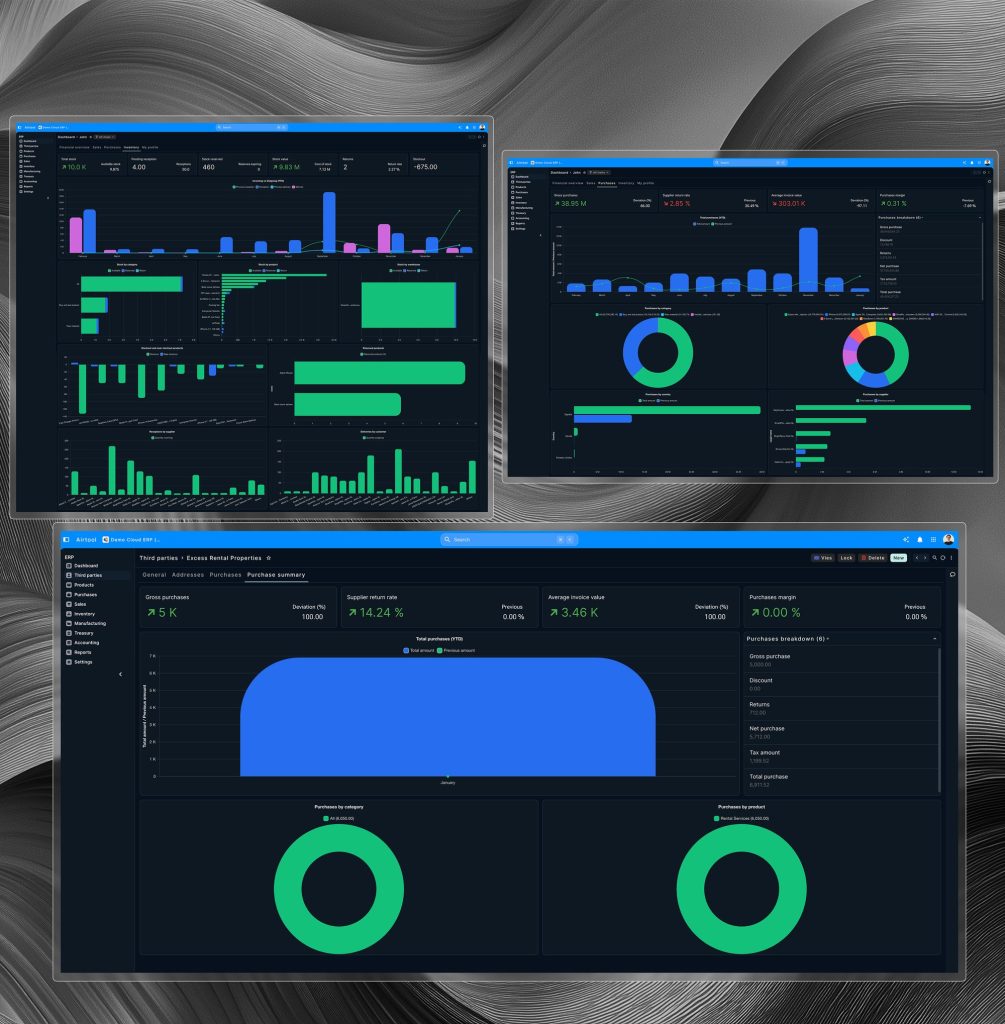
This is exactly where platforms like Airtool reflect the broader evolution happening across the enterprise software landscape. Instead of functioning as another disconnected tool inside an already fragmented stack, Airtool provides a comprehensive, supervised enterprise application platform. It combines a powerful metadata-driven runtime with native data fabric, analytics, and built-in AI capabilities.
If you explore how this unique low-code application development platform supports enterprise workflows, the long-term value becomes highly practical. Because the architecture materializes applications live from metadata rather than compiled artifacts, changes can be hot-reloaded across a cluster in milliseconds without disrupting business continuity.
Airtool allows organizations to build and run their operational systems inside one unified cloud environment. Businesses can seamlessly create:
-
Real-time operational dashboards
-
End-to-end workflow systems
-
Advanced reporting environments
-
Continuous automation layers
-
Scalable CRM and ERP operations
By running these mission-critical applications on a single runtime that bridges both transaction processing and interactive analytics, companies can completely bypass external business intelligence tools and front-end coding. This eliminates coordination delays, removes dependencies between disconnected systems, and stops operational friction before it impacts growth. Consequently, internal IT teams spend far less time managing fragile software relationships and complex database integrations.
The Companies Scaling Smoothly Usually Feel Less Operationally Heavy
This is one of the clearest patterns visible in modern enterprise growth. The fastest-moving organizations often feel surprisingly calm internally. This calmness does not exist because they have fewer responsibilities or smaller workloads. It exists because their core software systems create less resistance between teams.
In these organizations, workflows move continuously without getting stuck in silos. Approval processes feel lighter and move faster. Most importantly, operational visibility becomes easier to trust because the data is unified and live. Over time, that compounding clarity translates directly into massive competitive speed.
Final Thoughts
Enterprise growth today depends less on how many software systems a company owns. Instead, it depends heavily on how smoothly those systems allow people to operate together. Modern B2B solutions are intentionally evolving toward operational simplicity, extreme flexibility, and shared visibility. They are moving this way because enterprise teams can simply no longer afford fragmented workflows at scale.
The companies growing the fastest are almost never the ones adding more software to their stack. They are the smart organizations focused on removing operational friction before it has a chance to slow the business down.