
Ethiopia’s transportation system is changing rapidly. Motorcycles are now becoming one of the most practical and affordable mobility solutions for individuals and businesses. In both urban and rural regions, they help people overcome infrastructure challenges and limited road connectivity. As a result, demand for two-wheeler tires is increasing steadily. Tires play a critical role in
Ethiopia’s transportation system is changing rapidly. Motorcycles are now becoming one of the most practical and affordable mobility solutions for individuals and businesses. In both urban and rural regions, they help people overcome infrastructure challenges and limited road connectivity.
As a result, demand for two-wheeler tires is increasing steadily. Tires play a critical role in safety, performance, and fuel efficiency. Because of rough road conditions and frequent usage, replacement cycles are shorter, which further strengthens market demand.
According to industry research, the Ethiopia two-wheeler tire market is expected to grow consistently in the coming years, supported by rising motorcycle ownership and expanding commercial applications.
Market Overview and Growth Outlook
The Ethiopia two-wheeler tire market has shown stable expansion in recent years. In 2025, the market was valued at around USD 665 million. It is projected to grow to USD 693 million in 2026 and reach approximately USD 862 million by 2032, reflecting a CAGR of 3.70% during the forecast period.
This growth clearly highlights the increasing importance of motorcycles in daily transportation. They are widely used for commuting, delivery services, agriculture, and small business operations. As usage increases, so does tire consumption, especially in the replacement segment.
Rising Motorcycle Usage
Motorcycles have become a key part of daily life in Ethiopia. People prefer them because they are affordable, fuel-efficient, and suitable for difficult road conditions.
In many rural areas, motorcycles are often the only practical transport option. They can easily navigate unpaved roads where cars struggle. In cities, they are widely used for fast commuting and delivery services.
As usage increases, tire wear also increases. This creates a continuous demand for replacement tires. Motorcycle owners regularly replace worn-out tires to ensure safety, stability, and better performance on rough roads.
Infrastructure Development
The Ethiopian government is actively investing in road infrastructure development. New highways, improved rural roads, and better connectivity between regions are gradually transforming transportation networks.
These improvements encourage more people to adopt motorcycles as a reliable transport option. Even in areas where roads are still developing, motorcycles remain the most practical solution for mobility. As infrastructure expands, motorcycle ownership is expected to increase further. This will naturally boost demand for two-wheeler tires across both urban and rural regions.
Growth of Commercial Mobility
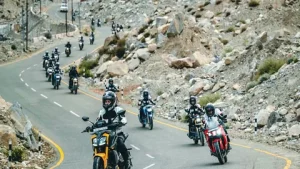
One of the strongest drivers of tire demand is the rise of commercial motorcycle usage. Businesses are increasingly relying on motorcycles for fast and cost-effective transportation. Delivery services, courier companies, agricultural transporters, and retail distributors all use motorcycles for last-mile connectivity. These vehicles often travel long distances daily, which increases tire wear significantly.
Because of this, commercial users replace tires more frequently than individual users. They also prefer durable and high-performance tires that reduce downtime and operating costs.
Replacement Market
The replacement segment dominates the Ethiopia two-wheeler tire market. Motorcycle owners frequently replace tires due to wear and tear caused by uneven roads and heavy usage. Unlike new vehicle sales, replacement demand remains consistent throughout the year. This ensures stable revenue for manufacturers, distributors, and retailers.
Safety is another important factor. Riders prioritize tire replacement to avoid accidents and maintain proper control, especially on rough or slippery roads.
Technological Advancements
Tire manufacturers are continuously improving product quality to meet local road conditions. Modern two-wheeler tires are designed with stronger rubber compounds, better tread patterns, and reinforced sidewalls.
These improvements help enhance grip, braking performance, and durability. They also reduce puncture risks, which is especially important in rural areas with rough terrain. In addition, manufacturers are focusing on fuel-efficient tire designs. These innovations help reduce rolling resistance and improve mileage, making them more cost-effective for users.
Motorcycles Dominate the Vehicle Segment
Motorcycles account for the largest share of Ethiopia’s two-wheeler tire market. In 2026, they are expected to represent around 85% of total demand.
Their popularity is driven by affordability, ease of use, and suitability for both personal and commercial applications. Internal combustion engine motorcycles continue to dominate due to existing fuel infrastructure and availability.
This dominance ensures steady and long-term demand for motorcycle tires across the country.
Competitive Landscape and Market Structure
The market is moderately fragmented, with the top five companies holding nearly 35% share. Companies compete mainly through distribution networks, pricing strategies, and product availability.
Manufacturers are expanding their dealer networks to reach rural and semi-urban regions. They are also focusing on improving after-sales support and introducing tire models designed specifically for Ethiopian road conditions. Affordable pricing and durability remain the most important competitive factors in this market.
Future Market Outlook
The future of the Ethiopia two-wheeler tire market looks stable and promising. Demand will continue to grow due to increasing motorcycle usage and expanding commercial transport activities. Infrastructure development will further support market expansion by improving connectivity and mobility. At the same time, rising e-commerce and delivery services will increase tire replacement cycles.
Manufacturers who focus on durable, affordable, and locally adapted products will gain a strong competitive advantage in the coming years.
Conclusion
The Ethiopia two-wheeler tire market is steadily evolving, supported by rising motorcycle adoption, infrastructure development, and growing commercial mobility needs. With consistent replacement demand and expanding usage across both rural and urban regions, the market is expected to maintain long-term growth. Companies that innovate and adral and urban regions, the market is expected to maintain long-term growth. Companies that innovate and ad