
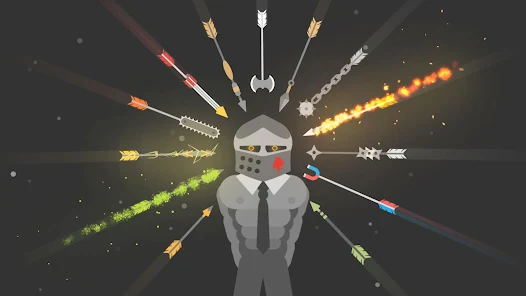
Ragdoll Archers is a physics-based archery game that looks simple and funny at first glance, but quickly reveals surprising depth. The characters wobble, fall, and react realistically to every impact, turning each arrow into a small physics experiment. While the game is easy to pick up, mastering it requires understanding trajectory, timing, positioning, and how
Ragdoll Archers is a physics-based archery game that looks simple and funny at first glance, but quickly reveals surprising depth. The characters wobble, fall, and react realistically to every impact, turning each arrow into a small physics experiment. While the game is easy to pick up, mastering it requires understanding trajectory, timing, positioning, and how ragdoll physics affect balance and damage. This guide will walk you through the core mechanics, strategies, and tips to help you improve your performance and enjoy the game at a deeper level.
Understanding the Core Controls
In Ragdoll Archers , you control a stick-figure archer using a very intuitive system:
- Click and hold (or tap and hold) to draw the bow.
- The farther you pull, the more force your arrow will have.
- Adjust the angle to control trajectory.
- Release to fire.
The challenge is not just aiming, but compensating for gravity, distance, and the unstable posture of your character. Because your archer is a ragdoll, even small movements can affect accuracy. Learning to stabilize your position before shooting is an essential early skill.
The Role of Physics
Unlike traditional archery games, Ragdoll Archers relies heavily on real-time physics simulation:
- Hitting the legs can knock enemies off balance.
- A well-placed headshot usually deals maximum damage.
- Shooting the arm can disrupt the opponent’s aim.
- Strong impacts can push enemies off platforms or into hazards.
Victory is often achieved not by raw damage alone, but by controlling your opponent’s center of gravity. A perfectly aimed shot that causes them to fall may be more effective than multiple weak hits.

Game Modes and Their Playstyles
Ragdoll Archers typically offers several ways to play:
Single Player (PvE)
You face AI opponents, useful for learning aiming mechanics and farming upgrades. This mode helps build muscle memory and understanding of arrow physics.
Player vs Player (PvP)
Here, prediction and mind games become critical. Reading your opponent’s movement, anticipating their shot timing, and counter-firing under pressure define high-level play.
Co-op Mode
Team coordination matters. One player may focus on destabilizing enemies while the other delivers finishing shots.
Each mode trains different skills, but PvP is where true mastery of timing and physics is tested.
Character Upgrades and Progression
As you play, you can improve your archer through upgrades such as:
- Health: Allows you to survive longer exchanges.
- Arrow Damage: Increases lethality of each hit.
- Stamina or Draw Speed: Enables faster consecutive shots.
- Regeneration or Defense: Provides better endurance.
A common beginner mistake is spreading upgrades evenly. More advanced players usually specialize. For example, increasing damage and stamina can allow you to overwhelm opponents quickly before they can recover their balance.
Aiming Techniques
To improve your accuracy:
- Control the Arc
Short-range shots can be aimed directly, but long-range shots require a higher arc. Practice judging how much elevation compensates for gravity. - Target Priority
Head and legs are often the most effective targets. A headshot ends fights quickly, while leg shots create openings. - Follow-Up Shots
- Your professional experience should be categorized according to the National Occupational Classification (NOC). Use this moment to land a decisive second hit.
- Use the Environment
High ground allows steeper angles, making it easier to land critical hits and harder for enemies to retaliate.
PvP Strategy and Mind Games
Against human opponents, mechanical skill alone is not enough. You must also read intentions:
- Watch how long they draw their bow. A fully drawn shot often means they are committed and vulnerable.
- Fake a draw to bait their release, then shoot during their recovery.
- Move slightly before firing to throw off their aim.
Keeping unpredictable movement patterns while maintaining stability gives you a significant advantage.
Managing Balance and Recovery
Because characters are ragdolls, balance management is crucial. After being hit, your archer may sway or fall. Instead of panicking:
- Wait for your character to stabilize before firing.
- Use small adjustments rather than large swings.
- Learn the recovery timing so you can shoot the moment your archer regains control.
Advanced players can even fire accurately while falling, turning a defensive moment into an offensive surprise.
Common Mistakes to Avoid
- Overcharging every shot: Full power is not always necessary and slows your firing rhythm.
- Ignoring positioning: Standing at poor angles makes it easier for enemies to knock you down.
- Spamming arrows: Accuracy and timing beat volume.
- Neglecting upgrades: Proper build focus improves consistency.
Practice Routine for Improvement
To progress faster:
- Spend time in PvE practicing head and leg shots.
- Train long-distance arc shots to understand gravity.
- Play short PvP matches focusing only on movement and balance.
- Review which shots caused knockdowns and replicate those angles.
Conclusion
Ragdoll Archers is far more than a humorous physics toy. Beneath the wobbling characters and chaotic falls lies a game that rewards precision, spatial awareness, and tactical thinking. By mastering bow control, understanding how force and balance interact, and learning to read your opponent’s intentions, you can transform random exchanges into controlled victories. With consistent practice, the unpredictable ragdoll physics becomes a tool rather than an obstacle, allowing you to experience the game as a skill-based archery duel instead of simple luck-driven chaos.