
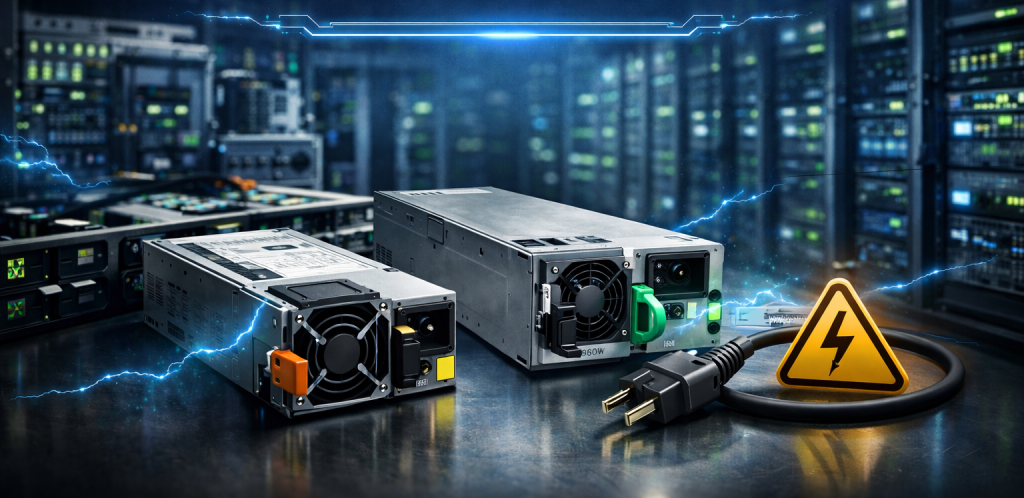
In today’s fast-moving digital world, data centers are expected to run without interruption. Businesses rely on them for websites, applications, cloud storage, and critical services. While processors, memory, and storage often get most of the attention, the server power supply unit (PSU) quietly plays one of the most important roles. Without a stable power supply,
In today’s fast-moving digital world, data centers are expected to run without interruption. Businesses rely on them for websites, applications, cloud storage, and critical services. While processors, memory, and storage often get most of the attention, the server power supply unit (PSU) quietly plays one of the most important roles.
Without a stable power supply, even the most advanced servers cannot perform properly. In fact, unstable or low-quality power delivery can bring an entire system down. That is why choosing a dependable server power supply is not optional—it is essential for long-term performance and uptime.
Why Power Supplies Matter So Much in Data Centers
A modern data center is a highly connected environment. It contains hundreds or even thousands of servers working at the same time. Each machine depends on a continuous and stable power flow.
If the power supply fails or fluctuates, the consequences can be serious:
- Unexpected system shutdowns
- Data loss or corruption
- Reduced server performance
- Hardware damage
Since enterprise servers are designed to run 24/7, they need power supplies that can handle constant pressure without overheating or losing efficiency.
A reliable PSU helps by:
- Keeping servers stable during heavy workloads
- Preventing sudden downtime
- Protecting sensitive components from voltage changes
- Extending the lifespan of hardware
In short, a strong power supply keeps the entire system alive and stable.
How Power Quality Impacts Server Performance
Server performance is directly tied to the quality of power it receives. Even small fluctuations in voltage can cause delays, errors, or complete system crashes.
This becomes even more critical in industries like:
- Cloud computing
- Financial services
- E-commerce platforms
- Enterprise applications
In these environments, even a few seconds of downtime can lead to financial losses or disrupted user experience.
That is why enterprise-grade power supplies are built to deliver:
- Stable voltage output
- High energy efficiency
- Advanced cooling support
- Protection against overloads and short circuits
For example, models like the Intel FXX750PCRPS are widely used in enterprise servers because they are designed for continuous, high-demand workloads without performance drops.

Energy Efficiency in Modern Data Centers
Today, data centers consume massive amounts of electricity. Because of this, energy efficiency has become a top priority for IT operators.
Low-efficiency power supplies waste energy and generate extra heat. This not only increases electricity bills but also puts more pressure on cooling systems.
On the other hand, high-efficiency PSUs help reduce energy waste and improve overall system performance.
For instance, the Delta DPS-750XB is known for delivering stable power while minimizing energy loss. This makes it a strong choice for large-scale server environments.
Key benefits of energy-efficient power supplies include:
- Lower electricity costs
- Reduced heat output
- Improved cooling performance
- Longer hardware lifespan
As a result, businesses not only save money but also support more sustainable operations.
The Importance of Redundant Power Supplies
In enterprise environments, uptime is everything. To ensure continuous operation, most servers use redundant power supply systems.
This means a server is equipped with two power supplies instead of one. If one fails, the other automatically takes over without interrupting service.
This setup is especially important in critical systems where downtime is not acceptable.
A commonly used enterprise solution is the Dell MGPPC, which is designed to support redundancy and ensure uninterrupted performance.
Benefits of redundant power supplies:
- Continuous system operation
- Built-in fault tolerance
- Easy maintenance and replacement
- Higher overall reliability
Even better, faulty units can be replaced while the server is still running. This ensures business operations continue without disruption.
Compatibility with Enterprise Server Hardware
Choosing the right power supply is not just about wattage. Compatibility plays a major role in system stability.
Each server chassis is designed to work with specific PSU models. Using an incompatible unit can lead to:
- System instability
- Reduced performance
- Hardware damage
- Cooling issues
That is why enterprise-grade PSUs like the Intel FXX750PCRPS, Delta DPS-750XB, and Dell MGPPC are preferred. They are designed specifically for server environments and deliver the exact power requirements needed.
When selecting a PSU, always consider:
- Server compatibility
- Power efficiency rating
- Wattage capacity
- Cooling support
- Build quality and durability
Taking these factors into account ensures smooth and long-term performance.
Power Supplies and Data Center Uptime
Uptime is one of the most important goals in any data center. Businesses depend on servers being available at all times.
A failing power supply can bring operations to a complete stop. That is why high-quality PSUs are built to support continuous workloads and maintain system stability.
Reliable units offer:
- Surge protection
- Short-circuit prevention
- Smart thermal control
- Load balancing features
With these protections in place, servers can operate safely even under heavy demand.
Cooling and Thermal Management
Heat is one of the biggest challenges in data centers. Every power supply generates heat during operation, and if not managed properly, it can damage hardware.
Low-quality PSUs often produce excessive heat, which forces cooling systems to work harder. This increases energy usage and shortens equipment lifespan.
High-quality models solve this problem through better design and airflow management. Units like the Delta DPS-750XB and Dell MGPPC are engineered for efficient heat dissipation, making them suitable for demanding enterprise environments.
Good thermal management leads to:
- Stable system performance
- Lower cooling costs
- Increased hardware longevity
Why Power Supplies Are the Backbone of Data Centers
Even though they are often overlooked, power supplies are the backbone of any server infrastructure. Without stable power, no system can function reliably.
High-quality PSUs ensure:
- Consistent voltage delivery
- Improved energy efficiency
- Strong protection mechanisms
- 24/7 operational stability
They also reduce risks and help maintain predictable system behavior under pressure.
Final Thoughts
In modern data centers, performance is not just about processing power or storage capacity. It starts with stable and reliable power delivery.
Investing in high-quality server power supplies like the Intel FXX750PCRPS, Delta DPS-750XB, and Dell MGPPC ensures that systems remain efficient, stable, and protected around the clock.
Ultimately, a good power supply is not just a component—it is a safeguard for uptime, performance, and long-term business success.