
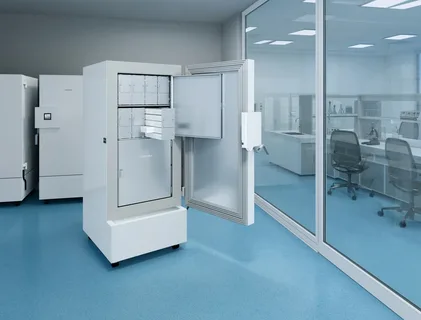
The global market for ultra-low temperature (ULT) freezers is currently undergoing a massive transformation. In 2024, the industry reached a valuation of USD 421.4 million. Experts now project a steady climb. By 2025, the market should hit USD 441.9 million, eventually soaring to USD 634.3 million by 2032. This represents a compound annual growth rate
The global market for ultra-low temperature (ULT) freezers is currently undergoing a massive transformation. In 2024, the industry reached a valuation of USD 421.4 million. Experts now project a steady climb. By 2025, the market should hit USD 441.9 million, eventually soaring to USD 634.3 million by 2032. This represents a compound annual growth rate (CAGR) of 5.17%.
This growth isn’t just about bigger boxes or colder temperatures. It reflects a fundamental shift in how we handle life sciences, precision medicine, and advanced therapeutics. As research scales up globally, the humble laboratory freezer has become a high-tech cornerstone of modern medicine.
A Broad Market Overview and Future Outlook
The ULT freezer market is entering a phase of long-term expansion. Why is this happening? Life science industries are moving faster than ever before. They are investing heavily in sophisticated laboratory systems to protect years of delicate research. There is a newfound emphasis on precision medicine. This requires the reliable preservation of biological samples like DNA, RNA, and proteins.
Pharmaceutical companies are also changing their approach. They now use ULT freezers to support the development of biologics and complex vaccine formulations. Clinical trials have become more rigorous, demanding better management of materials. Meanwhile, biotechnology firms rely on these units for cell banking and genome-based innovation.
Educational institutions and hospitals are not lagging behind either. They are modernizing their infrastructure to support early disease detection. This global shift toward personalized healthcare ensures that the demand for high-end cold storage will only go up.
Meet the Industry Leaders
Innovation in this space is driven by a mix of legacy brands and tech-forward newcomers. These companies are constantly pushing the boundaries of what a freezer can do.
Key players include:
-
PHC Corporation and Eppendorf SE (Long-time industry leaders)
-
Haier Biomedical and Esco Micro Pte. Ltd.
-
Trane Technologies plc and BioLife Solutions, Inc.
-
BINDER GmbH and NuAire, Inc.
-
Cole-Parmer, Arctiko, and Avantor, Inc.
These manufacturers focus on more than just cooling. They are looking at ergonomics, energy efficiency, and how their units fit into a digital lab ecosystem.
Defining Trends: The Smart and Green Revolution
The ULT freezer market is no longer a “set it and forget it” industry. Several key trends are reshaping how researchers interact with their equipment.
1. Sustainability and Energy Efficiency
Traditional freezers are notorious energy hogs. Manufacturers are now fighting back. They are building units with advanced compressors and innovative insulation. These power-saving modes significantly lower the carbon footprint of a laboratory. Furthermore, there is a massive push toward eco-friendly natural refrigerants. This shift is largely driven by global environmental regulations that aim to phase out harmful chemicals.
2. The Rise of the Internet of Things (IoT)
We live in a connected world, and labs are catching up. Many new ULT freezers come with IoT-enabled monitoring systems. These tools provide real-time tracking of internal temperatures. They offer predictive maintenance alerts, telling you a part might fail before it actually does. If a door is left ajar or the power flickers, researchers receive automated alerts on their smartphones. This level of oversight is vital for samples that are literally priceless.
3. Automation and Robotics
In large-scale research facilities, manual sample retrieval is becoming a thing of the past. Companies are integrating robotic systems that can pull samples without human intervention. This minimizes the time the freezer door stays open. Consequently, the internal temperature stays more stable, and the samples remain safer.
What is Fueling Global Demand?
Several scientific and clinical factors are acting as catalysts for this market. Here are the primary drivers:
-
Massive R&D Investment: Pharmaceutical and biotech companies are pouring money into research. This creates a direct need for more storage units.
-
Cell and Gene Therapy: These cutting-edge treatments are extremely sensitive. They require secure, ultra-low temperatures to remain viable.
-
Public Health and Surveillance: Governments are expanding their laboratory networks to monitor diseases. This has become a top priority following recent global health crises.
-
Stem Cell and IVF Growth: The rise in regenerative medicine and fertility treatments has led to a surge in specialized banking facilities.
Analyzing Market Dynamics
The evolution of the ULT freezer market isn’t happening in a vacuum. It is a result of specific technical and environmental pressures.
Technical Advancements
Manufacturers are no longer satisfied with basic cooling cycles. They are developing variable-speed refrigeration systems. These systems improve temperature stability while reducing noise and energy consumption. Smart control interfaces also make it easier for technicians to manage multiple units simultaneously.
Strict Environmental Laws
Regulatory bodies are cracking down on traditional cooling agents. This has forced the industry to innovate. The adoption of natural refrigerants isn’t just an option anymore; it’s a requirement for staying in business.
The Need for Data Integrity
Researchers need to prove that their samples have stayed at the correct temperature for years. This demand for traceability is driving the adoption of cloud-based monitoring. These digital logs provide an unchangeable record of the sample’s history, which is essential for regulatory approval.
Segmentation: Choosing the Right Tool
Not all labs have the same needs. The market is segmented to provide specific solutions for different scenarios.
By Product Type
-
Upright Freezers: These are the most common choice for modern labs. They offer high storage density and let researchers organize samples on shelves for quick access.
-
Chest Freezers: These units are excellent for long-term storage. Because cold air is heavier than warm air, it stays inside the unit when the lid is opened. This leads to better temperature stability.
Technology
-
Cascade Systems: This is the traditional method. It uses two separate refrigeration stages to reach extreme lows. It is reliable and widely understood by technicians.
-
Stirling Engine Systems: This technology is gaining ground. It uses fewer moving parts and consumes much less power. It also generates less heat, which helps keep the lab environment comfortable.
By Capacity
Labs can choose from small-capacity units for compact clinics, medium units for general research, or large-capacity units for massive biobanks.
A Regional Breakdown
Where you are in the world changes how you use this technology.
-
North America: This is a mature, high-tech market. Investment here is driven by a massive biopharmaceutical sector and a high density of biobanks.
-
Europe: European labs are the leaders in “green” technology. Strict environmental laws mean they adopt eco-friendly refrigeration faster than anyone else.
-
Asia Pacific: This is the fastest-growing region. Rapid healthcare modernization in countries like China and India is creating huge demand for new laboratory infrastructure.
-
Latin America & MEA: These regions are growing steadily. As they expand their public health laboratories and clinical research networks, they are increasingly looking toward advanced cold-storage solutions.
Final Thoughts
The ultra-low temperature freezer market is at a crossroads. It is moving away from being a simple storage solution and toward becoming a “smart” laboratory partner. With a projected value of over USD 634 million, the industry is clearly ready for the future.
Whether it is through IoT integration, green energy, or robotic retrieval, these freezers will remain the silent guardians of medical progress. For scientists working on the next big cure, knowing their samples are safe at -80°C is more than just a convenience—it is a necessity.